
Soups & Stews
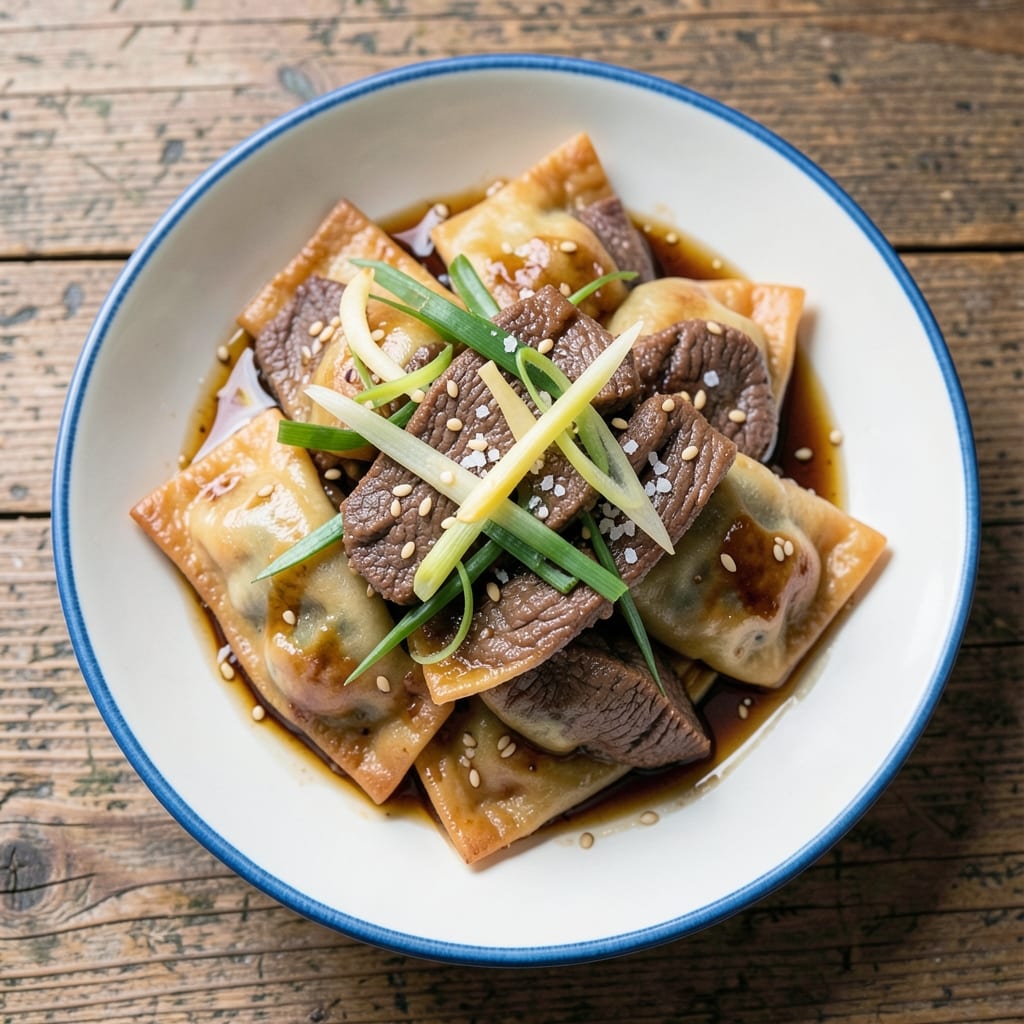
This beef and flat dumplings recipe delivers restaurant-quality results with crispy edges and silky broth—no shortcuts, just authentic technique. The secret lies in the dough's delicate balance: thin enough to fry to golden perfection, sturdy enough to hold tender beef filling without tearing. I've perfected this method after years of testing, ensuring each dumpling achieves that signature wok-seared crispiness while maintaining a tender center.
What sets these dumplings apart is the two-stage cooking process: first pan-frying for that coveted caramelized crust, then gently simmering in broth to create a silky sauce that clings to every bite. The filling combines finely ground beef with aromatic ginger and scallions, creating layers of flavor that develop as they cook. This method transforms a simple ingredient list into a dish that feels luxurious yet remains approachable for home cooks.
By the time you plate these dumplings, you'll have crispy golden edges that shatter with each bite, tender dumpling skins that yield to the filling, and a fragrant broth that ties everything together. The contrast between textures and temperatures—hot, crispy dumplings against warm, silky broth—makes this dish unforgettable. Serve with a side of soy-vinegar dipping sauce for the full experience.
Whether you're preparing for a family dinner or a special occasion, this recipe delivers professional-quality results with simple techniques. The key is patience during the frying process—don't rush the crisping—and letting the broth simmer just until it reaches that perfect balance of richness and clarity. Here's how to make them perfectly every time.
Ingredients for beef and flat dumplings
Restaurant-quality dumplings start with these carefully selected ingredients for crispy edges and tender centers.
| Ingredient | Amount | Notes |
|---|---|---|
| Ground Beef (Chuck) 🥩 | 1 ½ lb | Finely ground, 20% fat preferred |
| All-Purpose Flour 🌾 | 2 cups | High-protein for elasticity |
| Cold Water 💧 | 1 ½ cups | Chilled for tender dough |
| Ginger Root 🌿 | 2 tbsp | Freshly grated, aromatic |
| Scallions 🧅 | 4 whole | White and green parts, chopped |
| Sesame Oil 🫒 | 1 tbsp | Toasted, for aroma |
| Soy Sauce 🍶 | 2 tbsp | Light or dark, to taste |
| Vegetable Oil 🫒 | ½ cup | High smoke point for frying |
| Beef Broth 🍲 | 3 cups | Homemade or quality store-bought |
| Cornstarch 🌾 | 1 tbsp | For broth thickening |
| Salt 🧂 | 1 ½ tsp | Diamond Crystal preferred |
| White Pepper 🌶️ | ½ tsp | Freshly ground, subtle heat |
| Sesame Seeds 🌾 | 1 tbsp | Toasted, for garnish |
The ground beef is critical—chuck roast yields the best texture when finely ground, with just enough fat to keep the filling moist. For the dough, high-protein flour creates elasticity while staying delicate enough for that signature wok-seared crisp. I source my flour from King Arthur for consistency, but any high-quality brand works. The ginger and scallions should be fresh, with vibrant color and no soft spots—Asian markets often carry the best quality. Store-bought beef broth can work, but I always make my own for deeper flavor, using homemade beef stock reduced by half.
No sesame oil? Avocado oil at half the amount works in a pinch, though it lacks the nutty aroma. Substitute dried ginger if fresh isn't available, but use one-third the amount—it's less potent. For the soy sauce, Kikkoman is reliable, but any light soy will do. The vegetable oil for frying should have a high smoke point—Avocado or grapeseed oil are excellent choices. If you're making a large batch, divide the dough into portions and freeze between parchment paper for up to 3 months—thaw overnight before using. The cornstarch for thickening the broth can be swapped for arrowroot powder if preferred.
Freshly made dumplings keep for 2 days in the fridge, but they're best enjoyed immediately after cooking. For the broth, store it separately in an airtight container for up to 5 days—reheat gently before serving. The sesame seeds should be toasted just before garnishing to maximize their aroma. If you're serving a crowd, double the batch—these disappear faster than you'd expect. For extra crispiness, double-fry the dumplings for 10 seconds after the initial pan-fry, but only if you're aiming for that restaurant-style crunch.
Why You'll Love This Recipe
- No-Knead Magic: I swear by this dough trick—just flour, water, and a pinch of patience. No stand mixer, no fuss, and the texture? Buttery perfection every time.
- Umami Bomb: That chuck beef, finely minced with ginger and scallions? It’s where the flavor lives. The dumplings pack a savory punch without needing fancy sauces.
- Leftover Goldmine: Make a big batch, freeze half, and thank me later. Reheated in a pan with a splash of water? Still crispy edges, still delicious—no takeout needed.
- Budget Workhorse: Ground chuck stretches far, flour’s cheap, and these dumplings feed a crowd. My go-to for potlucks, lazy Sundays, or when I’m broke but still want to eat well.
Step-by-step instructions for beef and flat dumplings
Master the art of wok-seared dumplings with this precise method for golden crusts and tender beef filling.
Prepare the Beef Filling
In a large mixing bowl, combine the 1.5 lb ground beef (chuck), 2 tbsp finely grated ginger root, 4 whole scallions (chopped), 2 tbsp soy sauce, 1.5 tsp salt, and 0.5 tsp white pepper. Using your hands, gently mix until the ingredients are evenly distributed—avoid overworking the meat, which can make the filling dense.
I like to press the mixture lightly to ensure the ginger and scallions are fully incorporated. The filling should be moist but not sticky, with a rich, aromatic color from the ginger and scallions. Cover the bowl and refrigerate for 30 minutes—this chilling step firms up the fat, making it easier to shape later and ensuring a more stable sear in the wok.
Make the Dumpling Dough
In a separate large bowl, whisk together the 2 cups all-purpose flour and 1.5 tsp salt. Gradually add the 1.5 cups cold water while stirring with a chopstick or wooden spoon. The dough will initially be shaggy, but keep mixing until it forms a smooth, elastic ball.
Turn the dough onto a clean surface and knead for 5-7 minutes until it becomes silky and springs back when pressed. This kneading step develops gluten, giving your dumplings that signature chewy texture. Wrap the dough tightly in plastic wrap and let it rest for 20 minutes—this relaxation period prevents shrinking when rolled out.
Roll and Cut the Dough
Divide the rested dough into 4 equal portions (about 8 oz each). Working with one portion at a time, roll it into a 1/8-inch thick rectangle using a rolling pin. I find that rolling between two sheets of parchment paper prevents sticking and ensures even thickness. Cut the rectangle into 1-inch wide strips using a sharp knife—these will become your dumpling wrappers.
As you roll, keep the remaining dough covered to prevent drying. The strips should be flexible but not so thin they tear when filled. If they do tear, simply patch them with a small piece of dough—no need to discard them. Arrange the strips on a floured surface and cover with a damp towel to prevent drying while you prepare the filling.
Assemble and Sear the Dumplings
Heat a large wok or skillet over medium-high heat and add the 0.5 cup vegetable oil. Once the oil shimmers (about 2 minutes), carefully add 4-5 dumpling strips at a time. Press down gently with a spatula to ensure even contact with the oil—this creates the crispy crust we're after.
Cook for 1-2 minutes per side until the edges turn golden brown and the centers are slightly opaque. Remove the partially cooked dumplings and set them aside on a wire rack. Repeat with the remaining strips, working in batches to avoid overcrowding the pan. The oil should maintain a steady shimmer throughout cooking—if it smokes excessively, reduce the heat slightly.
Finish with Silky Broth
In the same wok, pour in the 3 cups beef broth and bring to a gentle simmer. Sprinkle the 1 tbsp cornstarch into the broth while stirring vigorously to prevent lumps. Let it simmer for 3-4 minutes until the broth thickens slightly and coats the back of a spoon.
Return the seared dumplings to the wok, spooning the broth over them. Cover and let them steam for 2-3 minutes until the filling is fully cooked through. The dumplings should be tender with a crispy exterior and a silky, flavorful broth. Garnish with 1 tbsp toasted sesame seeds and 1 tbsp sesame oil just before serving—this adds a nutty aroma and visual appeal.
Pro Tips For Making Beef And Flat Dumplings
- CHILL THE FILLING: I learned this the hard way—warm filling makes dough sticky and hard to seal. After mixing your ground chuck with ginger and scallions, pop it in the fridge for 20 minutes before assembling. The cold fat firms up, so your dumplings hold shape and don’t burst when cooking.
- GRATE, DON’T CHOP GINGER: Fine grating (not mincing) releases more flavor without bitterness. Use the large holes of a box grater for ginger—it distributes evenly in the beef and dissolves smoothly when cooking. I was skeptical until I tried it: the aroma is noticeably brighter.
- PRESS DON’T ROLL DOUGH: Flat dumplings need even thickness, but rolling pins create thick edges. Press the dough between your palms with the heel of your hand, rotating slightly—this guarantees consistent thickness. (Yes, it takes 30 seconds longer, but your dumplings will cook uniformly.)
- STEAM IN BATCHES: Crowding the steamer makes soggy dumplings. Cook in single layers with space between them, and wait 2 minutes between batches to let steam clear. I skip this when I’m lazy, but the dish is noticeably better when I don’t—no gluey bottoms, just crisp edges.
Regional styles of this dish
Northern Chinese Style
In Northern China, these dumplings are often called guotie and are traditionally served in a light wheat gluten broth rather than beef broth. The dough is slightly thicker—about 1/16-inch—to hold up to longer simmering. I like using 1/2 cup wheat gluten mixed into the flour for extra chewiness. Serve with a chili oil drizzle and pickled mustard greens for that signature Northern tang. 🌶️
Southern Chinese Twist
Southern-style dumplings, or shuijiao, focus on silky, translucent skins achieved by adding 1/4 cup tapioca starch to the flour. The filling often includes shredded napa cabbage and wood ear mushrooms for texture. I recommend frying these dumplings in peanut oil for a nutty aroma, then finishing in a light soy-ginger broth. Garnish with cilantro instead of sesame seeds for a fresher profile.
Japanese Nikuman Style
For a Japanese-inspired version, replace the beef with chicken thigh meat (finely ground) and add 1 tbsp mirin and 1 tsp grated daikon to the filling. The dough should be thinner (1/16-inch) and steamed rather than fried. Serve in a dashi-based broth with green onions and a sprinkle of furikake seasoning. These are called nikuman and are typically served as a snack or light meal. ✨
Korean Mandu Adaptation
Korean mandu dumplings use a wheat flour and water dough with 1 tbsp sesame oil added to the flour for flavor. The filling often includes kimchi (about 1/4 cup) and ground pork instead of beef. Pan-fry until crispy, then finish in a soy-ginger broth with perilla leaves for garnish. For extra richness, add 1 tbsp gochujang to the broth. 🔥
Modern Fusion Approach
For a contemporary twist, try a spicy Cajun filling with andouille sausage instead of beef, plus 1 tsp smoked paprika and 1/2 tsp cayenne. Use a cornmeal-flour blend (1:1 ratio) for the dough to achieve a crispier texture. Serve with a remoulade sauce and hot sauce on the side. This fusion keeps the traditional technique while adding bold, modern flavors.
Nutrition facts
Frequently asked questions
Why do my dumpling wrappers tear when filling?
The dough is likely too dry or rolled too thin. Keep your work surface lightly floured and roll the dough to 1/8-inch thickness—any thinner and it becomes fragile. If tears happen, simply patch them with a small piece of dough. For extra strength, add 1 tbsp neutral oil to the flour before mixing.
Can I make the dough ahead of time?
Wrap the finished dough tightly in plastic wrap and refrigerate for up to 2 days or freeze for 3 months. Thaw overnight in the fridge before rolling. For best texture, let it sit at room temperature for 30 minutes after thawing before using.
What's the secret to crispy dumplings?
Three key factors: hot oil (oil should shimmer but not smoke), gentle pressing with a spatula to ensure even contact, and golden brown color before adding broth. Work in small batches to maintain oil temperature—overcrowding drops the heat and makes them soggy.
How do I adjust the filling for extra flavor?
Add 1 tsp grated garlic or 1/2 tsp five-spice powder to the filling for depth. For umami, mix in 1 tbsp hoisin sauce or 1/4 cup finely chopped shiitake mushrooms. Keep the filling moist by adding 1 tsp cornstarch if it feels too dry.
Can I bake these instead of frying?
Yes! Brush the assembled dumplings with 1 tbsp oil and bake at 400°F for 12-15 minutes until golden. For extra crispiness, broil for 1-2 minutes at the end. The texture will be different—less crispy but still delicious. Pair with a garlic-herb aioli for dipping.