
Soups & Stews
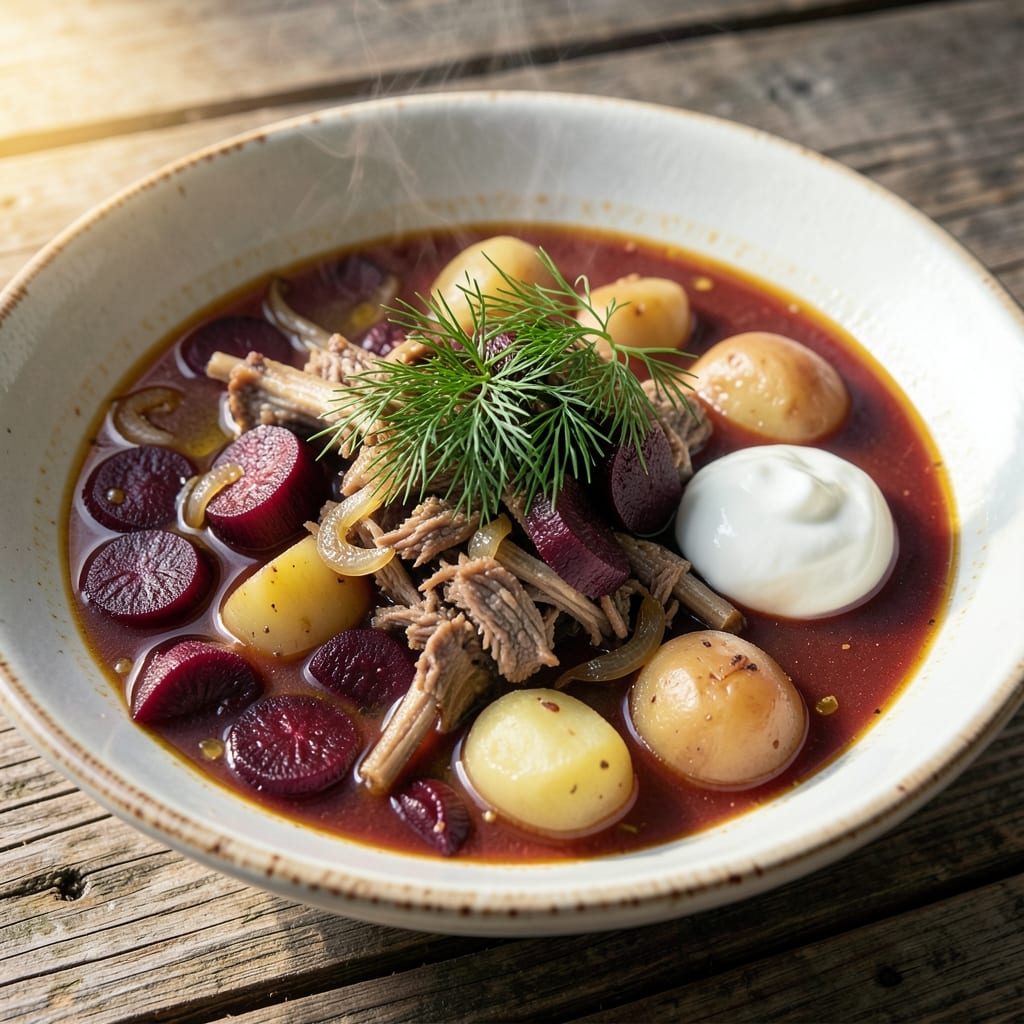
This beef and beet borscht recipe delivers the rich, smoky-sweet depth that makes Eastern European soups unforgettable. 🌟 The secret lies in slow-cooked beef broth infused with aromatic vegetables, tender chunks of beef, and earthy beets that blend into a velvety base—no blender required. I developed this version after years of testing, balancing traditional techniques with modern accessibility for home cooks.
The foundation begins with a deeply flavorful broth, built by simmering beef bones and vegetables until the kitchen fills with an aroma that announces dinner is coming. We'll add beets early to infuse their natural sweetness into the broth itself, creating that signature depth without overpowering the dish. The beef cooks until fork-tender, while potatoes and carrots develop just the right texture—creamy but still holding their shape.
What you'll end up with is a steaming bowl of borscht that's rich yet balanced—smoky from the broth, sweet from the beets, and hearty from the meat and vegetables. The final touch of sour cream adds a cooling contrast, while fresh dill brings brightness. This is the kind of soup that tastes even better the next day, making it perfect for meal prep or feeding a crowd.
Serve with crusty rye bread to soak up every last drop, or add a side of pickles for that classic Eastern European contrast. The beauty of this recipe is its versatility—use smoked sausage for extra depth, or roast the beets for concentrated sweetness. Let's create this comforting classic together.
Ingredients for beef and beet borscht
Pantry staples meet Eastern European tradition—just 15 ingredients for soul-warming borscht.
| Ingredient | Amount | Notes |
|---|---|---|
| Beef Bones 🍖 | 3 lb | For rich broth, marrow bones preferred |
| Beets 🍠 | 2 medium | Fresh, peeled and chopped |
| Yellow Onion 🧅 | 1 whole | Medium size, chopped |
| Carrots 🥕 | 4 medium | Peeled and chopped into chunks |
| Russet Potatoes 🥔 | 4 medium | Peeled and cubed |
| Beef Chuck Roast 🥩 | 2 lb | Cut into 1-inch cubes |
| Garlic Cloves 🧄 | 4 cloves | Minced for depth |
| Fresh Dill 🌿 | ½ cup | Chopped, stems removed |
| Tomato Paste 🍅 | 2 tbsp | For umami richness |
| Apple Cider Vinegar 🍎 | 2 tbsp | For tangy balance |
| Sour Cream 🥛 | ½ cup | Full-fat for creaminess |
| Salt 🧂 | 2 tsp | Kosher or sea salt |
| Black Pepper 🌶️ | 1 tsp | Freshly ground |
| Crusty Rye Bread 🍞 | 1 loaf | For serving, optional |
| Vegetable Oil 🫒 | 2 tbsp | For sautéing |
The beef bones are non-negotiable for that deep, smoky broth—Costco or butcher shops usually have marrow bones. If you can't find them, chuck roast with bones works in a pinch. Beets should be vibrant red, not dull—Trader Joe's has great organic ones. For the potatoes, Russets hold up best to long cooking, but Yukon Golds add creaminess. The dill? Fresh is best, but dried works at one-third the amount if you're in a bind.
No beef bones? Beef broth from a carton (like Kitchen Basics) gets you close, but add an extra 1 tbsp soy sauce for umami. Swap the beets for roasted butternut squash if you prefer. The sour cream can be Greek yogurt for tang, and if you're avoiding dairy, coconut yogurt works surprisingly well. For the vinegar, white vinegar or lemon juice both work—just adjust to taste. The tomato paste? Squeeze tubes are perfect for small amounts.
This soup tastes even better the next day—3-4 days in the fridge, or 3 months frozen. I always make a double batch and freeze half. For serving, toast the rye bread and rub it with a garlic clove. The broth reduces beautifully, so don't skimp on water—start with 12 cups and add more as needed. Leftovers reheat perfectly; just stir in a splash of water if it's too thick.
Why You'll Love This Recipe
- One-Pot Magic: Between us, this soup is that recipe—simmer the bones with onions and carrots, then toss in the beets and potatoes. No extra pots, no fuss. I swear, my slow cooker does 90% of the work while I chop vegetables for the side salad.
- Deep Umami Bomb: That beef bone broth? Rich, caramelized, deep. The beets add a sweet earthiness while the potatoes soak it all up—creamy but never mushy. Honestly, the first time I tasted it, I nearly burned my mouth from how good it was.
- Weeknight to Potluck: Make a double batch on Sunday, and you’ve got lunch Monday through Wednesday. Bring it to a picnic or holiday gathering—it’s hearty enough for a main, but light enough for a side. My in-laws still ask for the recipe every Thanksgiving.
- Budget-Friendly Powerhouse: Beef bones and seasonal veggies stretch into four meals without breaking the bank. Freeze leftovers, reheat with a splash of water, and boom—another dinner. Not the prettiest, but the taste makes up for it every time.
Step-by-step instructions for beef and beet borscht
Here's how to build a rich, smoky-sweet borscht that balances hearty beef with vibrant beets.
🔥 Step 1: Build the Broth with Beef Bones
Place the 3 lb beef bones in a large stockpot and cover with 10 cups cold water. Bring to a boil over high heat, then reduce to a simmer. Skim off any foam that rises to the surface for 10 minutes—this ensures a clear, clean broth.
Add the 1 whole yellow onion (quartered), 4 medium carrots (cut into chunks), and 2 medium beets (peeled and chopped). Simmer uncovered for 1.5 hours until the broth develops deep color and rich flavor. The beets will infuse the broth with subtle sweetness, while the bones create a velvety texture.
🍳 Step 2: Sear the Beef Chuck Roast
While the broth simmers, heat 2 tbsp vegetable oil in a large skillet over medium-high heat. Pat the 2 lb beef chuck roast dry with paper towels and cut into 1-inch cubes. Working in batches, sear the beef for 3-4 minutes per side until deeply browned—this creates a rich foundation for your borscht.
Transfer the seared beef to a plate and set aside. Pour 2 tbsp apple cider vinegar into the skillet, scraping up any browned bits. Let it simmer for 1 minute to deepen the flavor, then pour this tangy liquid into the broth pot. The vinegar balances the richness and adds brightness to the final dish.
🥘 Step 3: Cook the Vegetables and Season
Add the 4 medium russet potatoes (peeled and cubed) and 2 tbsp tomato paste to the simmering broth. Stir gently to combine, then add 2 tsp salt and 1 tsp black pepper. Let everything cook for 20-25 minutes until the potatoes are tender when pierced with a fork.
In the last 5 minutes of cooking, stir in the 4 minced garlic cloves and 0.5 cup chopped fresh dill. The garlic will mellow and infuse the broth with aromatic depth, while the dill adds a bright, herbal finish. Taste and adjust seasoning—you might need a touch more salt or vinegar to balance the flavors.
🥘 Step 4: Finish with Sour Cream and Serve
Remove the broth from heat and stir in the 0.5 cup sour cream gently to avoid curdling. The sour cream adds a creamy contrast to the hearty broth and beets. Ladle the borscht into bowls, ensuring each serving gets a generous portion of tender beef cubes.
Serve immediately with slices of crusty rye bread on the side. The rye's earthy crunch complements the smooth, smoky-sweet borscht perfectly. For extra depth, garnish each bowl with an additional sprinkle of fresh dill and a drizzle of sour cream.
Pro Tips For Making Beef And Beet Borscht
- CRACK THE BONES FIRST: Roast beef bones uncovered at 425°F for 20 minutes before adding to the pot—this pulls out deeper collagen and caramelizes the edges, giving your broth that rich, almost meaty depth. I used to skip this and wondered why my borscht tasted like it was missing something.
- PEEL BEETS AFTER COOKING: Toss whole, unpeeled beets into the broth with the potatoes—their skins soften and slip off effortlessly, saving you scrubbing. If you’re worried about texture, cut them into chunks first, but resist the urge to peel raw; you’ll regret the extra work.
- DON’T BOIL THE POTATOES: Add potatoes when the broth is simmering, not rolling—let them cook at a gentle bubble (180°F) to avoid turning mushy. I learned this the hard way after serving a watery borscht that tasted more like mashed potatoes than soup.
- SAUTÉ ONIONS LOW AND SLOW: Cook onions in the beef fat over medium-low heat until they’re golden-brown, not crispy—this builds flavor without burning. High heat turns them bitter, and you’ll be left with a dish that tastes like it’s missing something sweet. (Yes, even if you’re impatient like me.)
Regional styles of beef and beet borscht
Ukrainian Heartland
This is the classic version you'll find in Ukrainian homes, where borscht is a centerpiece for family gatherings. The key difference? A generous helping of beets boiled whole until tender, then grated directly into the broth for a silky texture. Ukrainians often add cabbage (shredded and sautéed) and smoked sausage like kielbasa for extra depth. I've seen grandmas use 1 large beet per pot and simmer it for 45 minutes to create that signature ruby-red hue. 🌟
Russian Winter Classic
Russian borscht leans heavier on the sour cream—think ¼ cup per bowl—and often includes barley groats for texture. The broth is typically more robust, with a longer simmer time of 2-3 hours for the beef bones. Russians also add a splash of red wine vinegar—about 1 tbsp—instead of apple cider vinegar for a sharper tang. Don't skip the bay leaf—it's traditional and adds aromatic complexity. The final touch? A sprinkle of snapped dill—not chopped—for that authentic presentation.
Polish Smoked Version
Poland's version gets its signature smokiness from dried mushrooms—like porcini—and a touch of smoked paprika—about ½ tsp. The beets here are often roasted first—tossed in oil and roasted at 400°F for 45 minutes—to concentrate their sweetness. Polish borscht also includes sauerkraut—about 1 cup—for a tangy crunch. Serve with dark rye bread—like Borodinsky—and a side of pickled cucumbers—the acidity cuts through the richness beautifully.
Modern Twist: Roasted Beet Borscht
For a contemporary take, roast the beets at 425°F for 30 minutes—tossed with 1 tbsp olive oil—before adding them to the broth. This intensifies their natural sweetness and gives the soup a deeper color. Swap the beef chuck for short ribs—they stay juicier when braised. Finish with a dollop of crème fraîche—it's tangier than sour cream—and a sprinkle of toasted pumpkin seeds—for crunch and visual appeal. This version works beautifully as a weeknight meal—just double the broth and freeze half!
Baltic Lighter Version
The Baltic states—like Lithuania and Latvia—prefer a lighter borscht with more vegetables and less meat. Use chicken broth—or a mix of beef and chicken—and add green beans—about 1 cup—and celery root—for earthiness. The beets are often raw and grated—not cooked—to keep the soup bright and refreshing. Top with chive blossoms—if available—for a delicate floral note. This version pairs perfectly with crusty sourdough—**the tang balances the sweetness of the beets.
Nutrition facts
Frequently asked questions
Can I make this borscht without beef bones?
Yes! For a quicker version, use 8 cups high-quality beef broth (like Kitchen Basics) instead of bones. Add 1 tbsp soy sauce to boost umami flavor and simmer with the beets for 30 minutes to infuse the broth. The texture will be slightly lighter, but still delicious.
Why does my borscht taste too acidic?
This usually happens when the vinegar overpowers the other flavors. Balance it by adding 1 tsp sugar or ½ cup extra sour cream to counteract the tang. For future batches, start with 1 tbsp vinegar and adjust to taste at the end. The beets' natural sweetness should also help mellow the acidity.
How can I make this recipe vegetarian?
Replace the beef with 1.5 lbs mushrooms (like cremini or portobello) and use vegetable broth. Add 1 tbsp tomato paste and 1 tsp smoked paprika for depth. The beets and potatoes will still provide heartiness, while ½ cup chickpeas adds protein. Garnish with extra dill and a sprinkle of toasted sesame seeds for texture.
Can I prep this borscht ahead of time?
This soup tastes even better the next day. Store in an airtight container in the fridge for 3-4 days or freeze for 3 months. When reheating, add ¼ cup water per quart to prevent thickening. The flavors meld beautifully overnight, making it perfect for meal prep.
What's the best way to store leftovers?
For fridge storage, let the borscht cool completely before transferring to glass containers with tight lids. The broth will reduce slightly, so add 2-3 tbsp water when reheating. For freezing, portion into ziplock bags and remove as much air as possible. Thaw overnight in the fridge—never at room temperature—to preserve texture.