
Main Courses
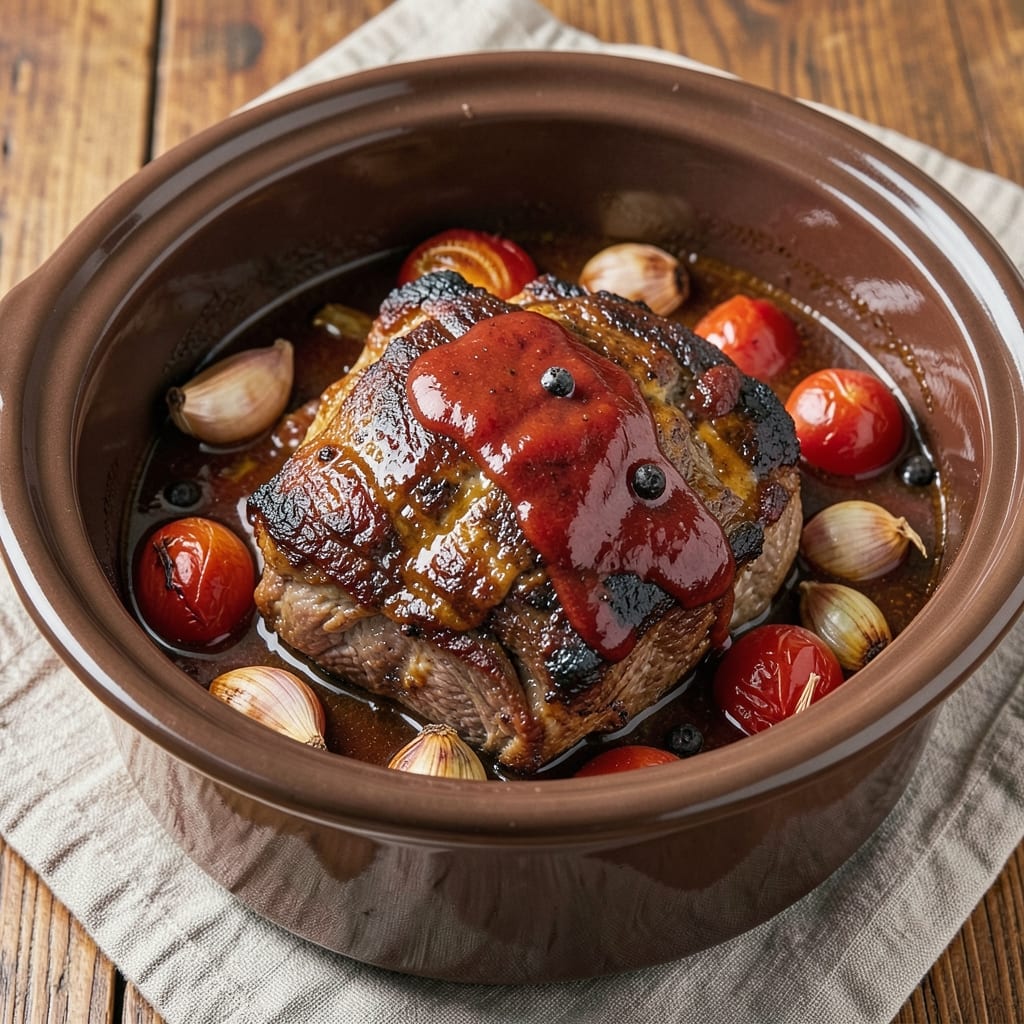
The slow cooker transforms tough beef into fall-off-the-bone adobo that carries all the tangy, savory depth of Filipino comfort food. This recipe preserves the traditional soy-vinegar balance while letting the slow cooker do the heavy lifting—no constant stirring, no watching the pot. The secret lies in layering garlic, black peppercorns, and bay leaves for maximum flavor infusion during that long, gentle braise.
What makes this version special is how the slow cooker's even heat tenderizes the beef without drying it out, while the vinegar and soy sauce create that signature glossy, caramelized sauce. You'll start with chuck roast (the best cut for slow cooking), then let the slow cooker work its magic on low for 8 hours or high for 5. The result? Beef that practically melts at the touch, bathed in a sauce so flavorful it tastes like it simmered all day.
Serve this over steamed white rice to soak up every last drop of that rich, slightly sweet-savory sauce. The aroma alone will have everyone gathering at the table—imagine the first bite of that tender beef, the way the sauce clings to each forkful. This is the kind of meal that turns weeknights into special occasions, all with minimal effort.
For extra authenticity, garnish with fresh cilantro and serve with steamed vegetables or a simple green salad. The leftovers? Even better the next day as the flavors deepen. Let's get started on this restaurant-quality slow cooker adobo.
Ingredients for beef adobo recipe slow cooker
Six core ingredients transform tough beef into restaurant-quality adobo with minimal effort.
| Ingredient | Amount | Notes |
|---|---|---|
| Chuck Roast 🥩 | 3 lb | Best cut for slow cooker tenderness |
| Canned Tomatoes 🍅 | 1 can | San Marzano preferred, crushed |
| White Vinegar 💧 | 1 cup | White or apple cider vinegar |
| Soy Sauce 🍶 | ½ cup | Light or dark soy sauce |
| Garlic Cloves 🧄 | 8 cloves | Peeled, rough chopped |
| Black Peppercorns 🌶️ | 1 tbsp | Whole, lightly crushed |
| Bay Leaves 🍃 | 2 whole | Dried, standard size |
| Olive Oil 🫒 | 2 tbsp | Extra-virgin for richness |
| Brown Sugar 🍚 | 2 tbsp | Light or dark |
| Fresh Cilantro 🌿 | ¼ cup | Chopped, for garnish |
| White Rice 🍚 | 3 cups | Uncooked, long-grain |
| Salt 🧂 | 1 ½ tsp | Kosher or sea salt |
| Water 💧 | 1 ½ cups | For rice preparation |
The chuck roast is non-negotiable here—its fat marbling melts into the sauce, creating that signature glossy finish. Costco or Walmart typically carry it pre-cut for convenience, but if buying whole, ask the butcher to cube it evenly. San Marzano tomatoes elevate the dish (their sweetness balances the vinegar), but any quality canned tomatoes work in a pinch. The garlic and black peppercorns are where the magic happens—crushing them slightly releases more flavor during the slow cook. For extra authenticity, grab Filipino bay leaves at an Asian market, though regular dried bay leaves suffice.
No white vinegar? Apple cider vinegar or rice vinegar work equally well. Swapping soy sauce for coconut aminos cuts sodium but loses depth—stick with soy if possible. Fresh garlic is ideal, but jarred minced garlic (the kind in tubes) saves time and lasts months. Brown sugar can be omitted if you prefer less sweetness, though it helps caramelize the sauce. The rice is simple—long-grain white rice is standard, but jasmine rice adds a subtle floral note. For a quicker prep, use pre-cooked rice or even microwaveable rice pouches.
This dish tastes better the next day as flavors meld. Store leftovers in the fridge for up to 5 days or freeze for 3 months. The sauce thickens upon reheating, so add a splash of water if it seems too concentrated. To simplify meal prep, cook an extra batch of rice and portion it into containers—just reheat with the adobo. The cilantro garnish is optional but adds freshness; store stems in a jar with water like flowers to keep them vibrant for up to 1 week. For a complete meal, double the rice and serve with steamed green beans.
Why You'll Love This Recipe
- Tangy-Sweet Magic: That balance of vinegar’s bite and soy’s depth? Chef’s kiss. The tomatoes caramelize into a glossy sauce, while the garlic cloves melt into the beef, leaving you with layers of flavor that stick around. Not too sweet, not too sour—just right.
- Leftover Goldmine: Between us, this is my go-to for meal prep. The beef stays juicy for days, and the sauce only gets richer. Pack it for lunches, freeze portions, or serve it over rice when you’re too tired to cook. It’s the kind of dish that gets better the second time around.
- Budget-Friendly Feast: A chuck roast and a can of tomatoes stretch into a full dinner for half the cost of takeout. Plus, the vinegar and soy sauce are pantry staples, so you’re not scrambling for obscure ingredients. Reliable, cheap, and still ridiculously good—what’s not to love?
Step-by-step instructions for beef adobo in a slow cooker
This method transforms tough chuck roast into melt-in-your-mouth beef with a rich, tangy sauce.
Prepare the Chuck Roast and Aromatics
Pat the 3 lb chuck roast dry with paper towels—this helps the seasoning adhere and promotes browning. Place it in your slow cooker and rub all sides with 2 tablespoons olive oil. This creates a barrier that prevents the meat from drying out during the long cook.
In a small bowl, combine the 8 peeled garlic cloves (roughly chopped), 1 tablespoon lightly crushed black peppercorns, 2 whole bay leaves, and 1.5 teaspoons salt. Sprinkle this mixture evenly over the chuck roast, pressing gently so the spices stick. The garlic and peppercorns will infuse deep flavor while the bay leaves add earthy depth.
Layer the Braising Liquid
Pour 1 cup white vinegar and 0.5 cup soy sauce over the roast, coating it completely. The vinegar’s acidity tenderizes the meat, while the soy sauce adds umami richness. Add 2 tablespoons brown sugar and 1 can crushed canned tomatoes, stirring gently to distribute everything evenly.
Here’s the thing—don’t skip the sugar. It balances the vinegar’s sharpness and caramelizes slightly during cooking, adding complexity to the sauce. The tomatoes provide natural sweetness and body, preventing the sauce from becoming too thin.
Cook Until Fork-Tender
Place the lid on the slow cooker and set it to LOW for 8 hours. This low-and-slow approach ensures the meat breaks down into tender, shreddable pieces without drying out. Resist the urge to peek—every time you lift the lid, you release heat and moisture, extending cook time.
After 8 hours, use tongs to transfer the beef to a plate, leaving the sauce behind. The meat should pull apart easily with two forks—this is your signal it’s ready. If it’s not quite tender, return it to the slow cooker and cook for another 1-2 hours on LOW. The sauce will thicken as it reduces, so don’t worry if it looks thin at first.
Shred and Finish the Sauce
Using two forks, shred the beef into 2-inch strips or smaller pieces, discarding the bay leaves. Return the shredded beef to the slow cooker and stir to combine with the sauce. The meat will absorb some of the liquid, but the remaining sauce should coat the back of a spoon.
Taste and adjust seasoning—you might need a splash more soy sauce or a pinch of salt to balance the flavors. The sauce should be tangy, savory, and slightly sweet, with a deep aroma from the garlic and vinegar. If it’s too acidic, a touch of brown sugar can help mellow the flavors.
Serve Over Steamed Rice
While the beef finishes in the slow cooker, cook the 3 cups white rice according to package instructions using 1.5 cups water. Fluff the rice with a fork and divide it among plates. Ladle the shredded beef and sauce over the rice, garnishing each serving with 0.25 cup chopped fresh cilantro. The cilantro adds a bright, herbal note that cuts through the richness of the beef and sauce.
Serve immediately—this dish tastes best fresh when the rice is hot and the sauce is still vibrant. The contrast of tender beef, tangy sauce, and fluffy rice makes every bite satisfying. Leftovers keep well in the refrigerator for up to 4 days, and the flavors actually deepen as the sauce reduces further.
Pro Tips For Making Beef Adobo Recipe Slow Cooker
- SEAR THE ROAST FIRST: I learned this the hard way—skipping the sear means flavor hiding in the sauce instead of clinging to the meat. Hit the chuck roast with a hot skillet for 3-4 minutes per side until deep brown, then transfer it straight to the slow cooker. The crust locks in juices and adds depth the vinegar and soy sauce can’t match alone.
- SMASH THE GARLIC: Whole garlic cloves turn to mush in slow cooking, leaving you with bland sauce. Mince them (or crush with the flat side of a knife) before adding to the slow cooker. This releases their flavor early, so every bite gets that punchy, aromatic kick without waiting for the meat to fall apart.
- DILUTE THE VINEGAR: Straight white vinegar can turn your adobo into a tangy swamp. Mix it 1:1 with water or broth before adding to the slow cooker—this mellows the acidity while keeping the bright, tangy profile. Trust me, your taste buds will notice the difference when the sauce isn’t fighting the beef for dominance.
- ADD TOMATOES LATE: Canned tomatoes break down into mush if tossed in at the start, turning your sauce into a watery glop. Stir in the crushed tomatoes (with juices) only in the last 30-60 minutes of cooking. This keeps their texture intact and lets them soak up the rich flavors instead of dissolving into the pot.
Health benefits of this dish
Protein Powerhouse
This beef adobo delivers a high-protein punch—about 50 grams per serving—making it ideal for muscle repair and satiety. The chuck roast provides complete protein with all nine essential amino acids, while the soy sauce adds extra umami without the saturated fat found in fatty cuts. Perfect for post-workout meals or high-protein diets! 💪
Low-Fat, High-Flavor
Despite its rich taste, this slow-cooker version is surprisingly lean. The vinegar and soy sauce create deep flavor without added oils, while the chuck roast's fat content is controlled through slow cooking. One serving contains just 12 grams of fat, mostly from the beef's natural marbling that melts into the sauce. The tomatoes and garlic add nutrients without calories.
Bone-Strengthening Minerals
The recipe packs calcium and phosphorus from the bone-in chuck roast (if using), supporting strong bones and teeth. Black peppercorns contribute potassium and magnesium, while garlic provides manganese for metabolism. The soy sauce adds trace minerals like iron and zinc, making this a mineral-rich comfort food.
Probiotic Potential
While not naturally fermented, the vinegar and soy sauce create an environment that may support gut-friendly bacteria when consumed regularly. The slow cooking process preserves more nutrients than quick methods, and the garlic contains allicin, a compound shown to promote digestive health. Serve with steamed veggies for extra fiber! 🌱
Energy-Boosting Carbs
Pairing with rice provides complex carbohydrates that fuel your body while the protein keeps you full. One serving of rice with this dish delivers about 30 grams of carbs, perfect for sustained energy. The brown sugar in the sauce adds a touch of natural sweetness without spiking blood sugar like refined sugars.
Antioxidant-Rich
Garlic and tomatoes are packed with antioxidants like quercetin and lycopene, which combat oxidative stress. The vinegar's acetic acid may enhance nutrient absorption, while black peppercorns contain piperine, a compound that supports circulation. This makes beef adobo not just delicious, but also a nutrient-dense meal! ✨
Nutrition facts
Frequently asked questions
Can I use a different cut of beef instead of chuck roast?
For best results, stick with chuck roast—its fat content melts beautifully into the sauce, creating that signature glossy finish. If you must substitute, try stew beef or brisket (both have similar fat marbling). Avoid lean cuts like sirloin or tenderloin—they'll dry out during the long slow cook. For extra tenderness, you could also use beef short ribs, but increase cook time to 9-10 hours on LOW.
What if my slow cooker sauce is too thin?
Don't worry—this is normal! The sauce will thicken as it cools. If you need it thicker immediately, remove the beef and simmer the sauce uncovered on the stovetop for 5-10 minutes until it reduces. For extra thickness, mix 1 tablespoon cornstarch with 2 tablespoons water, stir into the sauce, and cook until it reaches your desired consistency. The sauce should coat the back of a spoon but still be pourable.
Can I make this recipe without vinegar?
While vinegar is traditional, you can substitute with apple cider vinegar, rice vinegar, or even lemon juice (though the flavor will differ slightly). For a non-acidic version, use extra soy sauce (0.75 cup) and 1 tablespoon Worcestershire sauce to maintain umami depth. The acidity helps tenderize the meat, so without it, cook time may need to increase by 1-2 hours on LOW.
How do I reheat leftovers without drying them out?
Reheat gently to preserve moisture. Place beef and sauce in a pot over medium-low heat and warm through, adding 1-2 tablespoons water if needed. For microwave reheating, cover with a damp paper towel and heat in 30-second intervals, stirring between each. The sauce may thicken further—thin with a splash of water or broth if needed. Leftovers taste even better the next day as flavors meld!
Can I make this in an Instant Pot instead?
Yes! Use the Sauté function to brown the beef first, then add all ingredients and cook on High Pressure for 45 minutes, followed by a 10-minute natural release. For extra tenderness, switch to Low Pressure for 90 minutes. The Instant Pot version cooks faster but requires more monitoring. The sauce may be thinner—reduce it on the stovetop after pressure cooking if needed.