
Main Courses
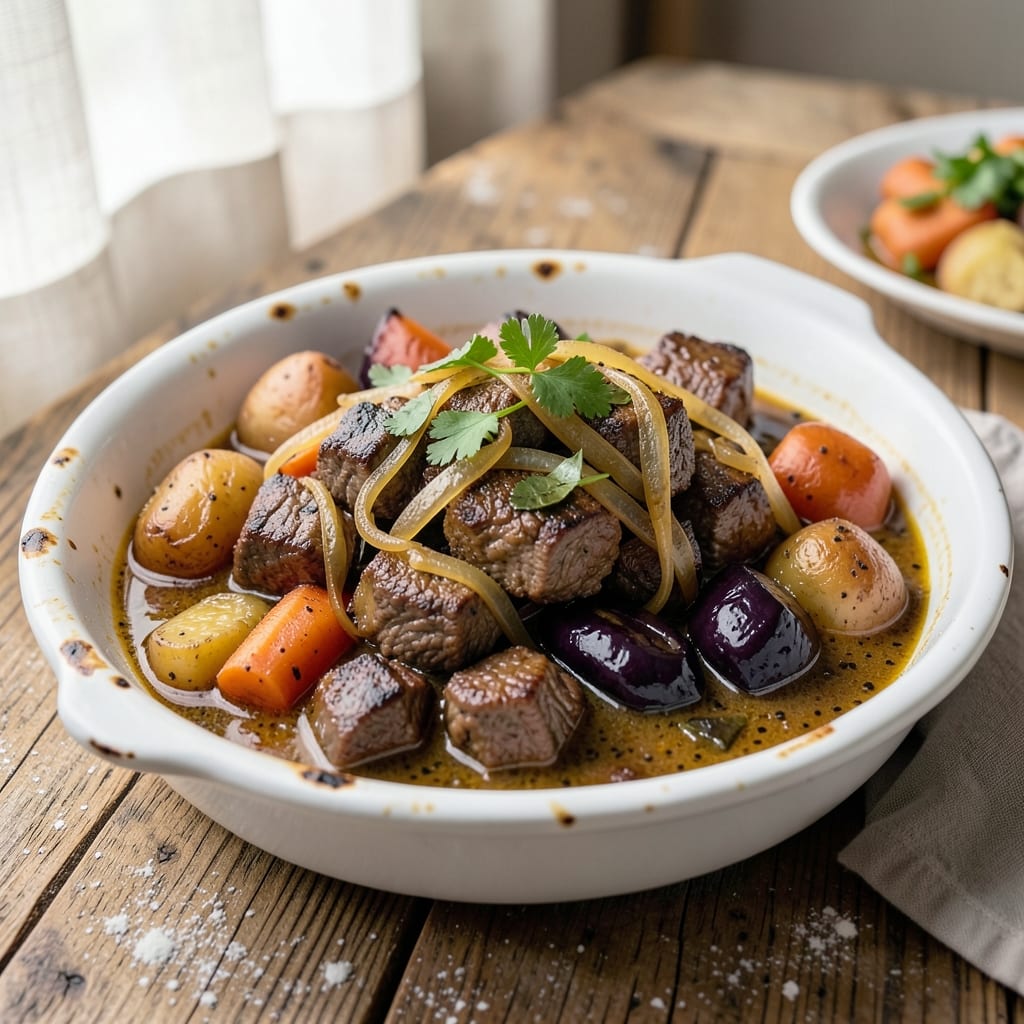
This Batangas beef caldereta recipe brings the hearty, comforting flavors of the Philippines straight to your kitchen, where tender beef simmers in a rich tomato gravy with potatoes, eggplant, and carrots until everything melts into perfect harmony. The slow-braised technique transforms tough cuts into fork-tender pieces while developing deep, savory notes that make every bite irresistible. What sets this version apart is the authentic Batangas touch—just the right balance of garlic, bay leaves, and a hint of vinegar that brightens the dish without overpowering its natural richness.
The secret to achieving restaurant-quality results at home lies in patience and layering flavors. You'll start by browning the beef to build a deep, caramelized foundation, then simmer everything together for at least 2 hours—this gradual cooking process ensures the vegetables soften just enough to soak up the gravy while maintaining their structure. The result is a dish that's equally satisfying as a weeknight family meal or a special Sunday dinner, where the aroma alone will have everyone gathering around the table.
By the time you serve this caldereta, you'll have a steaming pot of tender beef, velvety potatoes, and eggplant swimming in a glossy tomato gravy that's rich yet balanced, with just enough acidity to cut through the richness. The dish pairs perfectly with steamed white rice to soak up every last drop of that flavorful sauce, or serve it with toasted bread for a more rustic touch. This is comfort food at its finest—a dish that feels like a warm embrace after a long day.
Whether you're recreating a family tradition or introducing Filipino flavors to your menu, this caldereta delivers on both authenticity and approachability. The recipe scales beautifully for crowds, and leftovers reheat just as well as the first serving. Let's get started on creating this timeless stew that brings a taste of Batangas to your home.
Ingredients for batangas beef caldereta
Heartier than stew, richer than soup—this caldereta brings Batangas comfort to your pot.
| Ingredient | Amount | Notes |
|---|---|---|
| Beef Chuck Roast 🥩 | 3 lb | Cut into 1.5-inch cubes, trimmed of fat |
| Yellow Onions 🧅 | 2 whole | Chopped into 1-inch wedges |
| Garlic Cloves 🧄 | 8 cloves | Minced, for deep flavor |
| Russet Potatoes 🥔 | 2 lb | Cut into 2-inch chunks, peeled |
| Eggplant 🍆 | 1 lb | Cut into 1-inch cubes, salted and drained |
| Carrots 🥕 | 2 lb | Cut into 1-inch chunks, peeled |
| Canned Tomato Sauce 🍅 | 2 cups | San Marzano preferred, no added salt |
| Bay Leaves 🌿 | 4 whole | Fresh or dried, for aromatic depth |
| White Vinegar 💧 | ½ cup | For brightness, not overpowering |
| Olive Oil 🫒 | ½ cup | Extra-virgin for richness |
| Salt 🧂 | 2 tsp | Diamond Crystal preferred, adjust to taste |
| Black Peppercorns 🌶️ | 1 tsp | Freshly cracked, for warmth |
| Sugar 🍚 | 1 tsp | Balances acidity in sauce |
| Fresh Thai Basil Leaves 🌿 | ¼ cup | Chopped, for garnish (optional) |
The beef is non-negotiable here. Chuck roast breaks down beautifully during the long braise, while sirloin or flank steak stays too tough. Look for well-marbled cuts at Costco or your local butcher—they'll often cut it free if you ask nicely. The eggplant deserves special prep: salt those cubes, let them sweat for 15 minutes, then drain. This removes bitterness and helps them absorb the sauce like sponges. For the tomatoes, San Marzano cans from Trader Joe's or specialty stores deliver that authentic sweetness without canned aftertaste.
No chuck roast? Beef short ribs work beautifully—they'll just need 30 minutes extra simmering. Running out of bay leaves? Two dried leaves equal one fresh, but don't skip them entirely. The vinegar can be swapped for white wine or lemon juice, though vinegar's tang cuts through the richness most effectively. For the potatoes, Yukon Golds hold their shape better than Russets, but either works. The carrots can be baby carrots if that's what's in the fridge—just trim the ends. And that sugar? It's not sweetening the dish—it's balancing the vinegar's acidity so the sauce stays rich.
This dish tastes even better the next day as flavors meld. Store leftovers in the fridge for 4-5 days, or freeze portions for 3 months. I always double the recipe because it reheats beautifully—just add a splash of water or broth to loosen the sauce. For serving, steamed jasmine rice is traditional, but crusty bread soaks up every last drop. The basil? Tear it fresh over each bowl at the table—it adds a bright finish that takes this from weeknight dinner to restaurant-quality meal.
Why You'll Love This Recipe
- One-Pot Magic: I swear by this recipe—just toss everything into a pot, simmer, and walk away. The beef chuck roast practically melts into tender perfection while you’re chopping veggies for dinner, and the eggplant soaks up all that rich, garlicky goodness without falling apart.
- Deep, Savory Love: The secret’s in the slow braise—onions caramelizing into sweetness, garlic cloves frying until they’re fragrant and golden, and that beef developing layers of flavor that make every bite taste like a hug from your abuela. (Yes, even on a Tuesday night.)
- Leftovers That Beg for More: This dish only gets better the next day. The potatoes soften into pillowy clouds, the beef stays juicy, and the eggplant absorbs all the sauce, turning it into a creamy, dreamy stew. I’ve reheated portions for days—my kids still ask for it, and I still make it.
- Budget-Friendly Crowd-Pleaser: You’re getting a whole roast of beef for a fraction of the cost of steak, and the potatoes and eggplant stretch it into a meal that feeds six without breaking the bank. Honestly, it’s the kind of dish that makes you feel like you’re cooking for royalty, even when you’re just feeding the family.
Step-by-step instructions for Batangas beef caldereta
Here's how to transform tough beef and humble vegetables into a deeply flavorful Filipino stew.
Sear the Beef for Deep Flavor
Heat the 0.5 cup olive oil in a heavy Dutch oven over medium-high heat until shimmering. Working in batches, add the 3 lb beef chuck roast cubes and sear for 3-4 minutes per side until deeply browned. This step develops the rich, meaty foundation of your caldereta.
As the beef browns, you'll notice the fat rendering out and creating a beautiful crust on the meat. Don't rush this process—patience here means maximum flavor. Transfer the browned beef to a plate and set aside temporarily. You'll want to keep it warm but not continue cooking while you prepare the vegetables.
Sauté the Vegetable Base
In the same Dutch oven, reduce heat to medium and add the 2 whole yellow onions and 8 cloves garlic cloves. Cook for 5-6 minutes until the onions soften and turn translucent, releasing their sweet aroma. This is where the vegetable flavors begin to meld with the beef's caramelized crust.
Add the 2 lb carrots and 2 lb russet potatoes, stirring to coat in the onion-garlic mixture. Cook for another 3 minutes, letting the vegetables begin to soften slightly. This step ensures all your vegetables absorb that initial beef flavor. Now add the 1 lb eggplant cubes and toss gently to distribute evenly.
Build the Tomato-Vinegar Sauce
Pour in the 2 cups canned tomato sauce and 0.5 cup white vinegar, stirring to combine with the vegetables. Add the 4 whole bay leaves, 2 tsp salt, 1 tsp black peppercorns, and 1 tsp sugar, then return the beef to the pot. The vinegar will initially make the sauce look curdled, but don't worry—this will resolve as it simmers.
Bring the mixture to a gentle boil, then reduce heat to low and cover partially. Let it simmer for 1 hour, stirring occasionally. This slow cooking allows the beef to become fork-tender while the vegetables absorb all that rich, tangy sauce. The sauce should reduce slightly, coating everything beautifully.
Finish with Thai Basil and Rest
After 1 hour, taste the sauce and adjust seasoning if needed. The vinegar should be balanced by the sweetness of the carrots and potatoes. Stir in the 0.25 cup fresh Thai basil leaves just before serving—this adds a bright, herbal finish that cuts through the richness of the stew.
Let the caldereta rest for 10 minutes off the heat before serving. This resting period allows all the flavors to meld together perfectly. The beef should be fork-tender, the vegetables perfectly cooked, and the sauce thick enough to coat a spoon. Serve hot with steamed rice to soak up every delicious bite.
Pro Tips For Making Batangas Beef Caldereta
- Sear the Beef First: I learned this the hard way—skipping the sear makes the stew taste bland. After browning the beef chuck roast in batches (don’t overcrowd the pan!), you’ll get that deep, caramelized crust that carries flavor through the slow simmer. Use medium-high heat and let it sit until golden, not just pink—this is the thing that matters most.
- Cut Potatoes in Chunks: Batangas-style caldereta loves its potatoes tender but still holding shape. Cut them into 1.5-inch chunks (no smaller), and add them early in the simmer—not too late, or they’ll turn to mush. I used to slice them thin for speed, but the stew just falls apart. Thicker pieces stay intact and soak up the sauce better.
- Salt the Eggplant: This isn’t the prettiest method, but it works: Salt the eggplant slices and let them sit in a colander for 20 minutes before cooking. Rinse and pat dry—this removes bitterness and keeps them from turning to sludge in the stew. I know, I know, but trust the process. Your future self will thank you.
- Simmer Low and Long: After the initial sear and sauté, drop the heat to a bare simmer—just enough to keep tiny bubbles breaking the surface. Rushing this with high heat turns the beef tough and the sauce grainy. Cover the pot and let it cook for at least 2.5 hours (3 if starting with a big roast). Patience here guarantees melt-in-your-mouth beef.
Best sauces and condiments for these flavors
Tomato-Vinegar Base
This caldereta's signature sauce starts with a perfect balance of San Marzano tomato sauce and white vinegar. The vinegar brightens the rich tomato flavor while cutting through the beef's natural fat. I recommend using ½ cup vinegar for every 2 cups tomato sauce—this ratio keeps the sauce tangy without being sour. For extra depth, add 1 tsp sugar to balance the acidity. The sauce should coat the back of a spoon by the end of cooking. 💧
Umami Boosters
Filipino cooking relies on umami-rich ingredients to elevate flavors. For this dish, I add 2 tbsp soy sauce (or 1 tbsp fish sauce for a more traditional touch) during the final 30 minutes of simmering. The soy sauce adds a savory depth that complements the beef beautifully. Another secret? A pinch of ground annatto seeds (about ½ tsp) gives the sauce that characteristic golden hue you see in many Filipino dishes.
Herbal Garnishes
Fresh herbs make all the difference in this dish. I finish with ¼ cup chopped Thai basil just before serving—its anise-like flavor brightens the rich stew. For a different twist, try cilantro or Italian parsley if Thai basil isn't available. The herbs should be added at the very end so they retain their vibrant color and fresh aroma. A sprinkle of toasted garlic flakes adds another layer of complexity that pairs perfectly with the tangy sauce.
Crunchy Toppings
For texture contrast, serve this caldereta with toasted garlic bread or crispy fried shallots. The bread soaks up the delicious sauce, while the shallots add a satisfying crunch. I like to make a quick garlic bread by brushing 1 tbsp olive oil mixed with 1 minced garlic clove and ½ tsp dried oregano on crusty bread, then toasting until golden. This simple addition turns your caldereta into a complete meal experience. 🥖
Spicy Variations
If you love heat, add 1-2 tbsp Calabrian chili paste or 1 tbsp sriracha during the final 15 minutes of simmering. For a smoky kick, stir in ½ tsp smoked paprika with the spices. Remember, you can always adjust the heat level to taste—Filipino cuisine often balances rich flavors with just enough spice to keep things interesting. A squeeze of lime juice at the table also adds a refreshing zing. 🌶️
Nutrition facts
Frequently asked questions
Why does Batangas beef caldereta use vinegar?
The white vinegar in this recipe serves two key purposes: it brightens the rich tomato sauce and cuts through the beef's natural fat, preventing the dish from becoming too heavy. The acidity also helps tenderize the meat during the long simmer. For a milder version, you can substitute with lemon juice or white wine, but vinegar gives that authentic Batangas tang.
Can I make this caldereta in a slow cooker?
Brown the beef first in a skillet, then transfer everything to your slow cooker. Use the low setting for 6-7 hours or high for 4-5 hours. The slow cooker's gentle heat achieves the same tender results without monitoring. Just add the Thai basil at the very end before serving.
What's the best cut of beef for this recipe?
Chuck roast is ideal because it becomes fork-tender with slow cooking, but you can also use short ribs or brisket for extra richness. Avoid lean cuts like sirloin—they'll dry out. If your butcher offers beef shank, that works beautifully too, though it requires 30 extra minutes of simmering.
How do I fix a caldereta that's too sour?
If your sauce tastes too tangy, balance it with 1-2 tsp sugar or a pinch of brown sugar to neutralize the acidity. For a savory fix, stir in 1 tbsp soy sauce or a splash of beef broth. Let it simmer for 5 minutes to meld the flavors. The key is gradual adjustments—don't dump everything in at once!
Can I prepare this ahead of time for gatherings?
This dish actually tastes better the next day as flavors deepen! Make it 1-2 days ahead and store in the fridge. Reheat gently on the stove with a splash of water or broth to restore the sauce's consistency. For parties, freeze portions in airtight containers for up to 3 months. The beef stays tender, and you'll save time on cooking day.