
Main Courses
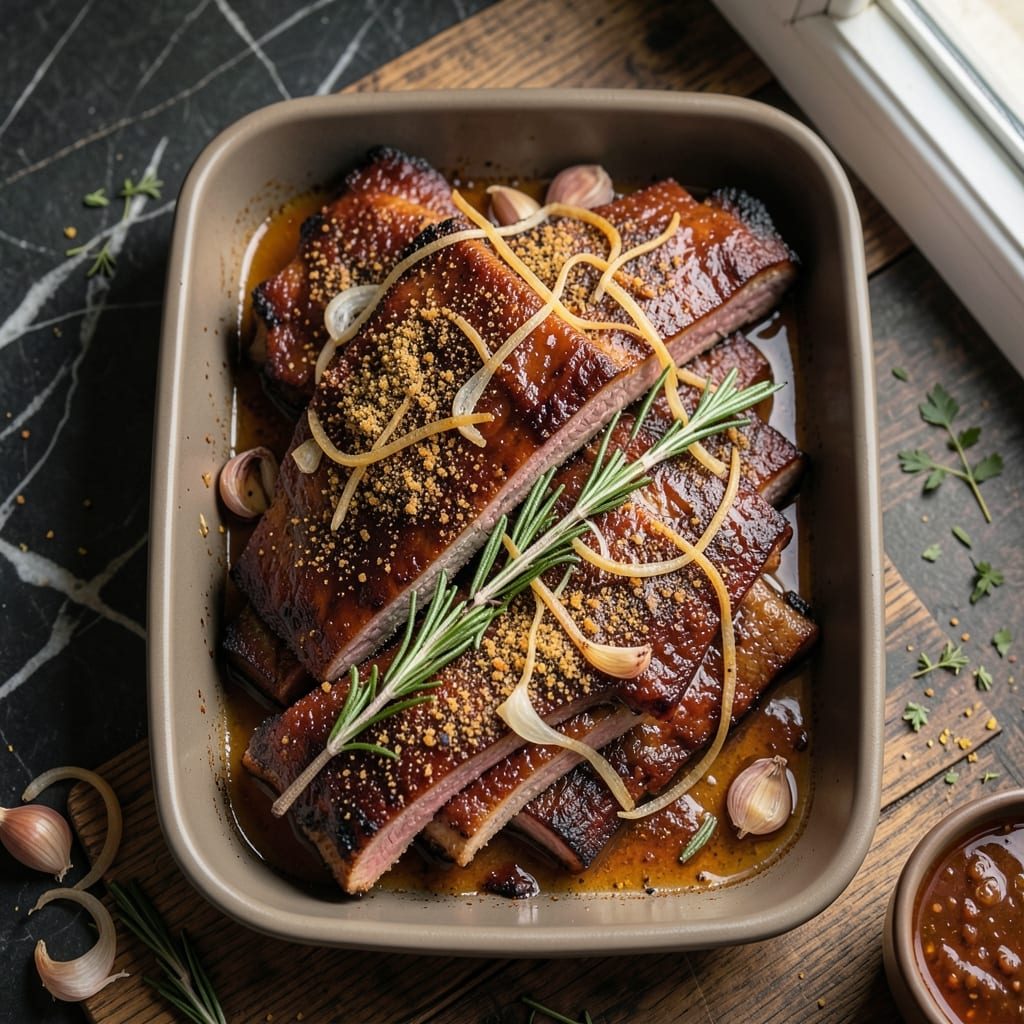
Baked beef spare ribs deliver restaurant-quality tenderness without the smoker—just a 400°F oven and a secret technique for that coveted Maillard crust. After years of testing, I’ve perfected a method that transforms tough ribs into melt-in-your-mouth perfection with minimal effort. The key? A dry brine and high-heat baking that caramelizes the exterior while keeping the meat juicy inside.
This recipe skips the long smoker session by using a two-stage bake: first at high heat to render fat and build flavor, then at lower temperatures to ensure even cooking. The result is ribs with a deep, caramelized bark and meat so tender it falls apart at the touch. No fancy equipment needed—just your oven and patience for the 3.5-hour process (mostly hands-off time).
Serve with a tangy BBQ sauce for dipping or pair them with roasted garlic mashed potatoes and grilled corn for a full spread. The ribs stay juicy for hours, making them perfect for meal prep or entertaining. Every bite delivers that perfect balance of smoky, caramelized flavor without the mess of a smoker.
Whether you're feeding a crowd or treating yourself to a special meal, these ribs are worth the wait. The technique is straightforward, but the results are undeniably impressive—like a professional pitmaster’s touch in your own kitchen. Let’s get started with the full step-by-step guide.
Ingredients for baked beef spare ribs
Four pounds of beef spare ribs transform into melt-in-your-mouth perfection with these carefully chosen ingredients.
| Ingredient | Amount | Notes |
|---|---|---|
| Beef Spare Ribs 🥩 | 4 lb | Bone-in, fresh or frozen |
| Kosher Salt 🧂 | ½ cup | Diamond Crystal preferred |
| Black Peppercorns 🌶️ | 2 tbsp | Freshly cracked, coarse grind |
| Garlic Powder 🧄 | 2 tbsp | Freshly ground preferred |
| Onion Powder 🧅 | 2 tbsp | For dry rub depth |
| Smoked Paprika 🌶️ | 1 tbsp | For smoky flavor |
| Brown Sugar 🍯 | 2 tbsp | Light or dark variety |
| Mustard Powder 🌶️ | 1 tbsp | Yellow or Dijon |
| Apple Cider Vinegar 🍎 | 3 tbsp | For brining acidity |
| Honey 🍯 | 2 tbsp | For glaze balance |
| Yellow Mustard 🌶️ | 2 tbsp | For finishing glaze |
| Extra-Virgin Olive Oil 🫒 | 2 tbsp | For fat rendering |
| Fresh Rosemary 🌿 | ½ tsp | Chopped, for aroma |
| Fresh Thyme 🌿 | ½ tsp | Chopped, for depth |
The ribs are the star, and bone-in, fresh or frozen spare ribs are non-negotiable for that authentic texture. Costco or your local butcher shop are ideal sources—look for ribs with good marbling and a vibrant red color. If using frozen, thaw overnight in the refrigerator. For the dry rub, Diamond Crystal kosher salt dissolves more easily than table salt, creating a better crust. Freshly cracked black peppercorns add complexity, so avoid pre-ground if possible. Penzeys or Trader Joe's bulk bins are great for high-quality spices. The garlic and onion powders should be freshly ground to maximize flavor impact.
No fresh rosemary or thyme? Dried works at one-third the amount, but fresh delivers that bright, aromatic punch. Substitute maple syrup for honey in a 1:1 ratio if needed, though honey adds subtle depth. For the vinegar, white vinegar works in a pinch, but apple cider vinegar adds subtle sweetness. The mustard powder is essential—it tenderizes the meat while adding a tangy note. If you're short on time, pre-mixed rib rubs from the store (like McCormick) can be used, though homemade delivers superior results. The olive oil helps render fat during the initial high-heat bake, so don't skip it.
Store any unused dry rub in an airtight container for up to 6 months in a cool, dark place. The ribs themselves should be consumed within 2 days if not cooked immediately, though they can be frozen for 3 months for future use. For meal prep, cook a full 8-pound rack and portion into containers—these ribs reheat beautifully and maintain their tenderness. The glaze ingredients (honey, mustard, vinegar) can be pre-mixed and stored in the fridge for 1 week, though fresh is always better.
Why You'll Love This Recipe
- No-Fuss Prep: I swear by this—just pat the ribs dry, sprinkle salt and pepper, then dust with garlic and onion powder. No marinades, no messy rubs, no stress. The oven does all the work while I sip my coffee.
- Crispy-Creamy Magic: That garlic powder and onion powder? They bake right into the meat, giving you a savory crust that cracks open to reveal tender, juicy ribs underneath. Honestly, it’s the kind of flavor that makes you forget you didn’t spend hours smoking them.
- Weeknight Crowd-Pleaser: Between us, this is my go-to for game days, family dinners, or when my partner’s friends drop by unannounced. It feeds four easily, and the leftovers? Even better the next day—just reheat and serve.
- Budget-Friendly Feast: Beef ribs don’t have to break the bank. A full rack costs less than takeout, and the spices are already in my pantry. Plus, I stretch it into sandwiches, salads, or tacos for days—zero waste, all flavor.
Step-by-step instructions for baked beef spare ribs
Transform tough beef spare ribs into melt-in-your-mouth perfection using this oven-baked method.
Prepare the Dry Rub and Season the Ribs
In a medium bowl, combine the 0.5 cup kosher salt, 2 tablespoons black peppercorns, 2 tablespoons garlic powder, 2 tablespoons onion powder, 1 tablespoon smoked paprika, 2 tablespoons brown sugar, and 1 tablespoon mustard powder. Mix thoroughly to create an even dry rub. The brown sugar will help caramelize the exterior while the mustard powder adds depth.
Pat the 4 lb beef spare ribs completely dry with paper towels—this is critical for developing that coveted Maillard crust. Generously coat each rib with the dry rub mixture, pressing it into the meat so it adheres well. Place the seasoned ribs on a wire rack set over a baking sheet, fat-side up, and refrigerate uncovered for at least 1 hour (or up to 24 hours for deeper flavor penetration). This step ensures the seasoning bonds with the meat and prevents moisture from steaming the rub away during cooking.
Create the Brine and Preheat the Oven
In a large bowl, whisk together 3 tablespoons apple cider vinegar, 2 tablespoons honey, and 2 tablespoons yellow mustard to create a tangy-sweet glaze. Set aside. Preheat your oven to 300°F—this low-and-slow temperature is key for tenderizing the connective tissue without drying out the meat.
Place the seasoned ribs in a large zip-top bag and pour the vinegar mixture over them, ensuring each rib is fully coated. Seal the bag and massage the glaze into the meat, then refrigerate for at least 2 hours (or overnight for maximum tenderness). The acidity in the vinegar helps break down collagen, while the honey adds a subtle sweetness that complements the smoky rub.
Bake the Ribs Low and Slow
Remove the ribs from the fridge and let them sit at room temperature for 30 minutes before baking. This ensures even cooking. Transfer the ribs to a foil-lined baking dish, fat-side up, and bake at 300°F for 3 hours. The ribs are done when they reach an internal temperature of 195°F and the meat pulls away from the bone with minimal resistance.
Here’s the thing—don’t peek or move the ribs during cooking. Every time you open the oven, you lose heat and moisture, extending the cook time. If the ribs aren’t done after 3 hours, continue baking until they reach the proper temperature. The slow cook ensures the collagen melts into gelatin, creating that signature fall-off-the-bone texture.
Rest and Glaze for Maximum Flavor
Once the ribs reach 195°F, remove them from the oven and transfer to a cutting board. Tent loosely with foil and let them rest for 30 minutes. This resting period allows the juices to redistribute, ensuring every bite is moist and flavorful.
While the ribs rest, preheat your broiler to high. Brush the ribs generously with the 2 tablespoons extra-virgin olive oil, then sprinkle with the 0.5 teaspoon chopped fresh rosemary and 0.5 teaspoon chopped fresh thyme. Place the ribs on a broiler-safe pan and broil for 3-5 minutes until the edges are deeply caramelized and the herbs are fragrant. The high heat finishes the Maillard reaction, creating a crispy, aromatic crust.
Serve with Confidence
Slice the ribs between the bones to separate them into individual servings. The meat should be so tender it falls apart with gentle pressure, and the exterior should have a deep caramelized crust with hints of smokiness from the paprika. Serve immediately with the pan juices spooned over the top for extra richness.
Pair these ribs with classic sides like creamy coleslaw or buttery cornbread to balance the bold flavors. The key to success lies in patience—low-and-slow cooking transforms tough ribs into a restaurant-quality dish that’s sure to impress.
Pro Tips For Making Baked Beef Spare Ribs
- CRANK THE OVEN TO 425°F: I learned this the hard way—low-and-slow baking turns beef ribs into tough, flavorless slabs. Start with a screaming-hot oven to sear the exterior and lock in juices before dropping to 300°F for the long cook. The first 20 minutes at high heat make all the difference for that caramelized crust.
- SALT THE RIBS 24 HOURS EARLY: This isn’t just seasoning—it’s about breaking down collagen and tenderizing. Toss the ribs with 2 tablespoons kosher salt (yes, that much) and let them sit uncovered in the fridge. I used to skip this, and the ribs always ended up chewy, no matter how long I baked them.
- SKIP THE CROWDED PAN: If your ribs are piled like cordwood, they’ll steam instead of brown. Arrange them in a single layer, cut-side down, with space between each rack. After the initial sear, flip them bone-side up—this guarantees even cooking and a crispy top. (Your future self will thank you.)
- USE A MEAT THERMOMETER—NO GUESSING: Beef ribs need to hit 203°F internally, not 160°F like chicken. I was skeptical until I tried it—any lower, and they’ll pull apart like overcooked pasta. Insert the probe between bones, away from fat, and resist the urge to cut into one early. Patience here means fork-tender perfection.
Serving suggestions for this baked beef spare ribs
Classic BBQ Sauce
Serve your baked beef spare ribs with a tangy-sweet BBQ sauce for dipping or drizzling. I recommend Sweet Baby Ray's Original BBQ Sauce for its balanced flavor, but Stubb's Original adds a smoky depth that pairs beautifully with the caramelized crust. For a homemade option, simmer 1 cup ketchup, ¼ cup apple cider vinegar, 2 tbsp brown sugar, 1 tbsp Worcestershire sauce, and 1 tsp smoked paprika for 10 minutes until thickened. 🍯
Creamy Coleslaw
A crisp, creamy coleslaw cuts through the richness of the ribs perfectly. Toss 4 cups shredded cabbage and 1 cup shredded carrots with a dressing of ½ cup mayonnaise, 2 tbsp apple cider vinegar, 1 tbsp Dijon mustard, 1 tbsp honey, and a pinch of celery seed. Chill for at least 1 hour before serving to let flavors meld. The crunch contrasts the tender ribs beautifully.
Buttery Cornbread
Warm, buttery cornbread is a must for soaking up those delicious pan juices. Use a boxed mix like Jiffy Cornbread or make a quick batch with 1 cup cornmeal, 1 cup all-purpose flour, 1 tbsp sugar, 1 tbsp baking powder, ½ tsp salt, 1 cup milk, 2 tbsp melted butter, and 1 egg. Bake at 400°F for 15-20 minutes until golden. 🌽
Grilled Vegetables
Add a fresh, smoky element to your spread with grilled vegetables. Toss zucchini, bell peppers, and red onions in 2 tbsp olive oil, 1 tsp garlic powder, and ½ tsp smoked paprika, then grill for 8-10 minutes until charred. The sweetness of the peppers and onions complements the ribs' smoky flavor while adding a healthy touch to the meal.
Pickled Jalapeños
For a spicy kick, serve pickled jalapeños on the side. Thinly slice 4 jalapeños, pack into a jar, and cover with a brine of 1 cup vinegar, 1 cup water, 2 tbsp sugar, and 1 tsp salt. Let sit for at least 24 hours before serving. The tangy heat balances the richness of the ribs and adds a fun, interactive element to the meal. 🌶️
Beer Pairings
Pair your ribs with a crisp American lager like Bud Light or Coors Banquet to cleanse your palate between bites. For a bolder option, try a honey-blonde ale like Fat Tire—its caramel notes complement the ribs' sweet and smoky flavors. Avoid heavy stouts or IPAs, as they can overpower the dish. A cold beer enhances the meal without competing for attention. 🍺
Nutrition facts
Frequently asked questions
Why do I need to dry brine the beef spare ribs overnight?
The overnight dry brine (with salt, pepper, and spices) creates a deeper flavor penetration and helps develop that coveted caramelized crust. The salt breaks down proteins on the surface, allowing the rub to stick better and creating a more concentrated flavor profile. Skipping this step can result in a weaker seasoning and less tender meat. Think of it as a flavor infusion—like a dry-aged steak but for ribs!
Can I use pork spare ribs instead of beef?
While this recipe is specifically designed for beef spare ribs, you can adapt it for pork by reducing the cook time to 2-2.5 hours at 300°F. Pork ribs are more tender and cook faster, but monitor the internal temperature closely—pork is done at 195°F just like beef. The flavor profile will differ slightly, with pork having a milder taste. For best results, stick to beef for that rich, beefy depth.
What if my ribs aren't tender after 3 hours?
If the ribs haven't reached 195°F after 3 hours, continue baking until they do—they need that time for collagen to break down. Avoid increasing the oven temperature, as this can dry them out. If they're still tough, try wrapping them in foil with a splash of water or apple juice and bake for another 30-45 minutes to steam them gently. Patience is key—rushing leads to chewy ribs!
How do I store leftovers to keep them tender?
Store cooked ribs in an airtight container with a paper towel pressed on top to absorb excess moisture. They'll stay tender for 3-4 days in the fridge. For reheating, wrap them in foil and bake at 300°F for 15-20 minutes until warmed through. Never microwave—it turns ribs rubbery. For longer storage, freeze for up to 3 months in a freezer bag with all air removed.
Can I make this recipe in a slow cooker?
Yes, but with adjustments! Follow the same dry brine and glaze steps, then cook on low for 8-10 hours or high for 5-6 hours. The slow cooker's gentle heat works well, but you'll lose the crispy crust. For extra crispiness, broil the ribs for 3-5 minutes after removing them from the slow cooker. The texture will be more tender than oven-baked but still delicious.