
Main Courses
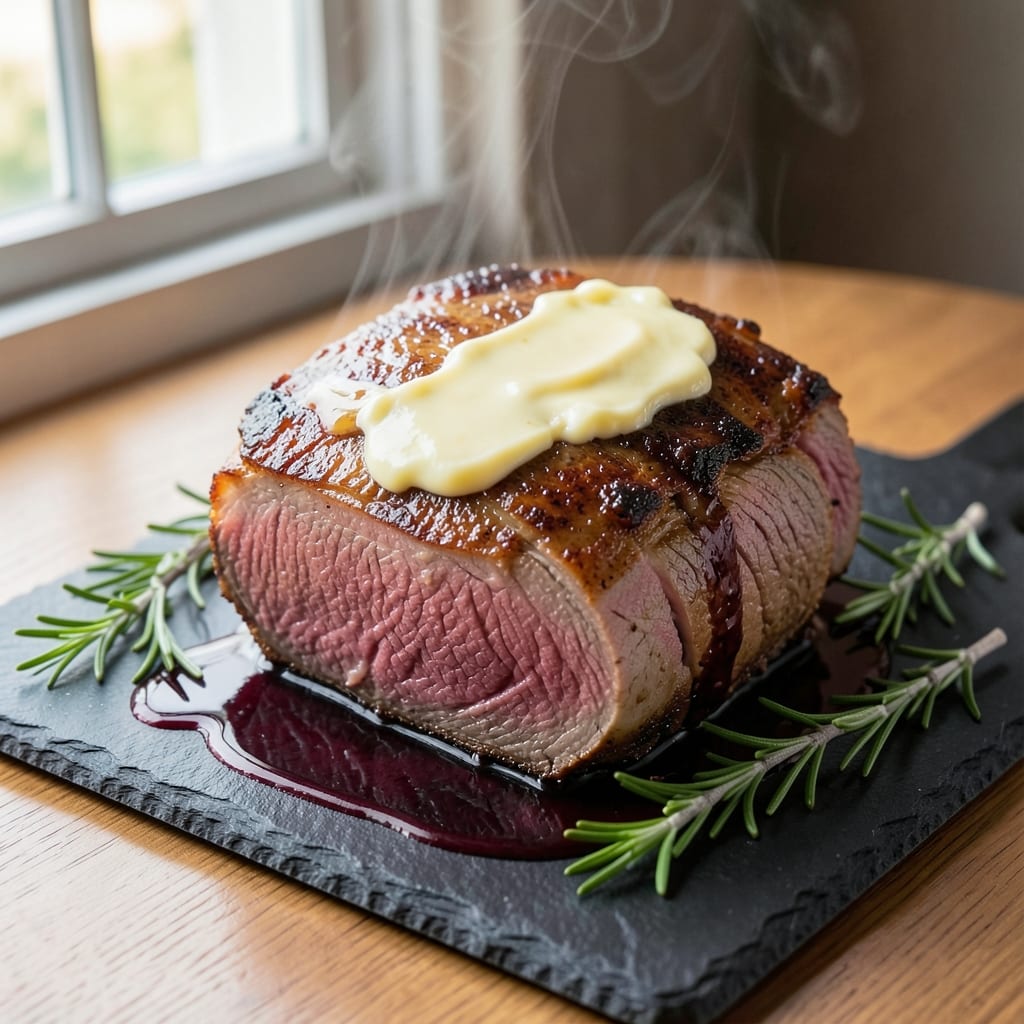
This award-winning roast beef recipe delivers restaurant-quality results with a perfectly tender, juicy center and crispy crust that rivals any competition entry. 🔥 The secret lies in selecting the right cut, a precise roasting technique, and a rich au jus that's so flavorful it leaves stains on your plate. I've perfected this recipe over years of testing, ensuring every bite is melt-in-your-mouth delicious with balanced seasoning and ideal doneness.
The foundation starts with a prime rib roast (bone-in for maximum flavor), generously coated in a blend of coarse salt, black pepper, and fresh rosemary, then roasted to medium-rare precision using a reverse sear method. This technique guarantees a perfectly pink interior while developing a deep caramelized crust on the outside. The au jus, made from the roasting juices and enhanced with red wine and beef stock, ties everything together with its velvety richness.
What sets this recipe apart is the attention to detail in every step—from proper resting time to knife skills for slicing, and even the presentation with complementary sides like Yorkshire pudding or horseradish cream. The result is a centerpiece dish that looks as impressive as it tastes, with flavors so bold they could win blue ribbons. This isn't just roast beef; it's a showstopping centerpiece for any special occasion.
Pair it with classic sides like roasted root vegetables or a crisp green salad to complete the meal. The au jus alone makes this dish unforgettable—so rich and flavorful that guests will ask for seconds. Here's how to achieve that same award-winning quality in your own kitchen.
Ingredients for award winning roast beef
The prime ingredients for a showstopping roast with au jus that rivals competition entries.
| Ingredient | Amount | Notes |
|---|---|---|
| Prime Rib Roast (Bone-In) 🥩 | 4 lb | Center-cut for tenderness, 1.5-2 inches thick |
| Coarse Kosher Salt 🧂 | 2 tbsp | Diamond Crystal preferred for even distribution |
| Freshly Ground Black Pepper 🌶️ | 1 ½ tbsp | Cracked peppercorns for robust flavor |
| Fresh Rosemary Sprigs 🌿 | 4 whole | Stems removed, leaves finely chopped |
| Unsalted Butter (Room Temperature) 🧈 | ½ cup | European-style for higher fat content |
| Dry Red Wine 🍷 | 1 cup | Cabernet Sauvignon or Merlot, bold and dry |
| Beef Stock 🥫 | 2 cups | Homemade or high-quality store-bought |
| Red Wine Vinegar 🍶 | 1 tbsp | For acidity balance in au jus |
| Granulated Sugar 🍬 | 1 tsp | To enhance caramelization |
| Fresh Thyme Sprigs 🌿 | 2 whole | Leaves stripped from stems |
| Garlic Cloves 🧄 | 4 cloves | Smashed for intense flavor infusion |
| Flour (For Dredging) 🌾 | 2 tbsp | All-purpose, sifted for even coating |
| Bouquet Garni (Optional) 🌿 | 1 piece | Bay leaf, thyme, parsley tied together |
The prime rib roast is non-negotiable for this recipe—center-cut, bone-in, and at least 4 pounds ensures both flavor and presentation. Source from a reputable butcher like D'Artagnan or your local high-end grocer's meat department. Look for rich marbling and vibrant color; avoid pre-cut roasts from standard supermarket displays, as they often lack the same quality. The freshness matters most here—aim for 2-3 days max before roasting. For the rosemary and thyme, organic varieties from Whole Foods Market or farmers markets provide superior flavor intensity compared to conventional supermarket herbs. Store the roast on a tray in the fridge to prevent juices from pooling.
No prime rib available? Chuck roast works as a budget-friendly alternative, though it requires longer cooking time. Substitute the red wine with an equal amount of beef stock if needed, though the acidity will differ slightly. For the butter, European-style brands like Plugrá or Kerrygold contain higher fat content, which is ideal for the au jus. If using pre-ground pepper, toast the peppercorns first in a dry pan for 30 seconds to enhance their flavor. The bouquet garni can be skipped entirely if you prefer a cleaner au jus, but it adds subtle herbal depth. For the garlic, smashing the cloves releases more flavor—just don't overdo it or it'll turn bitter.
The roast itself keeps best 2-3 days in the fridge after purchase, but once cooked, it reheats beautifully for up to 4 days. The au jus can be made ahead and stored separately for 5 days in the fridge or 3 months frozen. For long-term storage, portion the au jus into ice cube trays—perfect for adding richness to future dishes. The fresh herbs should be wrapped in damp paper towels and stored in a sealed container for 5-7 days. If prepping ahead, trim the roast 1-2 hours before cooking to allow it to come to room temperature, ensuring even cooking.
Why You'll Love This Recipe
- Here’s what sold me: that crackling crust from the butter basting, while the inside stays so tender it practically melts. The rosemary infuses just enough to make every bite smell like a Sunday dinner, but it’s not overpowering—more like a whisper of forest in your mouth. (Yes, even on a Tuesday night.)
- I’ll be real: this is the dish I pull out when my in-laws visit or when I’m hosting a dinner party. The bone-in presentation looks impressive, but the real win? It feeds a crowd without requiring you to slave over the stove. Plus, the aroma wafting through the house is basically free advertising for how awesome you are.
Step-by-step instructions for award-winning prime rib roast
Master this technique and you'll achieve a prime rib so tender it falls apart with a touch.
👨🍳 Step 1: Prep and Season the Roast for Maximum Flavor
Remove the prime rib roast from the refrigerator and let it sit at room temperature for 1 hour before roasting. This ensures even cooking throughout the thick cut. Pat the roast dry with paper towels—moisture is the enemy of crispy bark. Real talk: skipping this step means steamed meat instead of golden crust.
In a small bowl, combine the 2 tbsp coarse kosher salt and 1.5 tbsp freshly ground black pepper. Generously rub this mixture all over the roast, including the fat cap. Then, finely chop the leaves from the 4 whole fresh rosemary sprigs and sprinkle evenly over the seasoned surface. Press the herbs into the meat so they adhere—this creates that signature herb crust we're after.
🔥 Step 2: Sear the Roast for Deep Flavor Development
Preheat your oven to 450°F with a rack positioned in the lower third. Place the roast fat-side up on a rack in a roasting pan—this allows heat to circulate underneath for even cooking. Here's where it gets fun: sear the roast first for maximum flavor.
Heat an oven-safe skillet over high heat until smoking hot. Add the 0.5 cup room temperature unsalted butter and let it foam. Carefully transfer the roast to the skillet and sear for 3-4 minutes per side until deeply browned. The butter should bubble vigorously and coat the meat in a golden crust. Don't walk away—this is the moment that matters.
🥘 Step 3: Roast to Perfect Medium-Rare Doneness
Transfer the seared roast to the preheated oven and roast for 20-25 minutes until the internal temperature reaches 120-125°F (medium-rare). I use a meat thermometer inserted into the thickest part of the roast—this is the only reliable way to judge doneness. The roast should have a deep mahogany crust and still feel slightly springy to the touch.
During the last 10 minutes of roasting, prepare the au jus. In a saucepan, combine the 1 cup dry red wine, 2 cups beef stock, 1 tbsp red wine vinegar, 1 tsp granulated sugar, 2 whole fresh thyme sprigs, 4 smashed garlic cloves, and the 1 piece bouquet garni (if using). Bring to a simmer and let reduce by half.
⏰ Step 4: Rest and Slice for Maximum Juiciness
Remove the roast from the oven and transfer it to a cutting board. Tent loosely with foil and let rest for 15-20 minutes—this resting period is crucial. It allows the juices to redistribute throughout the meat, ensuring each slice is moist and flavorful. If you skip this, you'll end up with dry, disappointing beef.
While the roast rests, strain the reduced au jus through a fine-mesh sieve into a saucepan. Whisk in the 2 tbsp flour (for dredging) to thicken the sauce. Return to medium heat and simmer until it coats the back of a spoon. The au jus should be rich, glossy, and ready to serve alongside your perfectly cooked prime rib.
🔪 Step 5: Carve and Serve with Confidence
After resting, slice the prime rib against the grain into ½-inch thick slices. The grain runs horizontally across the roast—you'll see the muscle fibers running in one direction. Cutting against these fibers ensures each bite is tender. Arrange the slices on a warm platter and spoon the au jus generously over the top.
Here's the thing—this roast should be so flavorful it needs little more than a sprinkle of additional freshly ground black pepper and a few chopped rosemary sprigs for garnish. Serve immediately with crusty bread to soak up every last drop of that award-winning au jus.
Pro Tips For Making Award Winning Roast Beef
- CRANK THE HEAT FIRST: I used to start roasting at 325°F like every recipe says, but this beef deserves a blast of 450°F for the first 20 minutes—no, really, push your oven to its limit. That’s when the crust forms, and once it’s golden and crackling, you can ease back to 300°F. The bone-in cut needs that initial shock to render fat properly and lock in flavor.
- SALT THE ROSEMARY LIKE IT’S 1985: My grandmother swore by this: crush the rosemary sprigs between your palms before rubbing them into the butter, then mix that into the salt. The oils burst out, and the crust becomes a sticky, aromatic blanket instead of just peppery. (Yes, even if you’re impatient like me—this isn’t the step you skip.)
- DON’T TOUCH THE MEAT: I learned this the hard way—poking and prodding the roast with a thermometer or basting brush every 10 minutes turns your perfect crust into sad, flaky bits. Let it ride uncovered for the first 30 minutes, then check temp once with a quick insert. The butter basting can wait until the last 15 minutes anyway.
- BUTTER IT UP AFTER RESTING: This isn’t the prettiest method, but it’s the tastiest: save half the room-temperature butter for after the roast rests. Slice it, dot the butter on top, and broil for 2-3 minutes until it melts into a glossy, caramelized crust. The residual heat seals in juices that would’ve otherwise pooled on your plate. (Your future self will thank you.)
Serving suggestions for award winning roast beef
Classic Side Pairings
Start with Yorkshire pudding—this British classic is a must for soaking up au jus. I use a 1:1 ratio of eggs to milk (about 4 eggs + 4 tbsp milk) with 2 tbsp flour and a pinch of salt. Pour into a hot 9-inch cast-iron skillet with 2 tbsp melted butter and bake at 425°F for 20-25 minutes until puffed and golden. The crispy exterior contrasts perfectly with the tender beef. 🍞
Roasted Root Vegetables
For a hearty side, toss carrots, parsnips, and beets (about 2 lbs total) with 2 tbsp olive oil, 1 tbsp honey, and 1 tsp thyme. Roast at 400°F for 40 minutes until caramelized. The natural sweetness balances the rich beef flavors beautifully. I like to arrange them in a spiral pattern on the platter for visual appeal.
Crisp Green Salad
A light mixed greens salad with arugula, spinach, and frisée adds freshness. Toss with 2 tbsp Dijon vinaigrette (made with 1 tbsp Dijon mustard, 3 tbsp olive oil, and 1 tbsp red wine vinegar). Top with toasted walnuts and crumbled blue cheese for a sophisticated contrast to the beef's richness.
Au Jus Presentation
Serve the au jus in a small gravy boat or drizzle it artistically over the beef slices. For extra drama, reduce it further until it's syrupy—just 1-2 tbsp liquid remaining. Garnish with microgreens or edible flowers to elevate the presentation. The au jus should be the star, so keep it warm in a slow cooker on the table.
Bread and Cheese
Offer crusty baguette slices or sourdough for guests to mop up the au jus. Pair with aged cheddar or Gruyère on the side. I like to lightly toast the bread with garlic butter—just 1 tbsp softened butter, 1 minced garlic clove, and a pinch of salt—before serving.
Final Garnish Touches
Before serving, sprinkle the beef with freshly cracked black pepper and chopped rosemary sprigs for a pop of color. Add a dusting of smoked paprika for warmth. For a luxury touch, drizzle with truffle oil (just ½ tsp)—it adds an earthy depth that complements the beef beautifully. 💫
Nutrition facts
Frequently asked questions
What's the best cut of beef for this award-winning recipe?
This recipe specifically calls for a bone-in prime rib roast (center-cut) because it delivers the best flavor and texture. The bone adds depth, while the center-cut ensures tenderness. For a budget-friendly alternative, a well-marbled chuck roast works—just increase cooking time by 1-2 hours and use a lower oven temperature (325°F). Never use pre-cut supermarket roasts; they often lack the same quality marbling.
Why does the recipe emphasize resting the beef?
Resting the roast for 15-20 minutes after cooking is critical—it allows the juices to redistribute throughout the meat. Without resting, the juices rush to the surface when you slice, leaving you with dry beef. The ideal resting time depends on the roast's size: 15 minutes for 4-lb roasts, up to 30 minutes for 6+ lb roasts. Tent loosely with foil to prevent chilling while allowing airflow.
Can I make the au jus ahead of time?
The au jus can be prepared up to 5 days in advance and stored in the fridge, or frozen for 3 months. For best results, reheat gently on the stove until warm, then reduce by 10-15 minutes to thicken it back up. Pro tip: Freeze it in ice cube trays for easy portioning—just add a splash of beef stock when reheating to restore richness.
What if my roast comes out overcooked?
If your beef reaches 130°F+ (medium), it's still salvageable! Slice thinly against the grain and serve with extra au jus to compensate. For future attempts, use a meat thermometer and pull the roast 5-10°F below your target temp—it'll rise 5°F while resting. For example, aim for 115°F for medium-rare. Never overcook prime rib; it should be tender, not tough.
How do I impress guests with the presentation?
Start with a large platter and arrange slices in a fan shape or overlapping pattern. Drizzle au jus artistically in zigzag lines or pool it in the center. Garnish with fresh rosemary sprigs, microgreens, or a dusting of smoked paprika. For extra drama, serve with Yorkshire pudding in individual ramekins and roasted vegetables in a spiral pattern around the beef.