
Main Courses
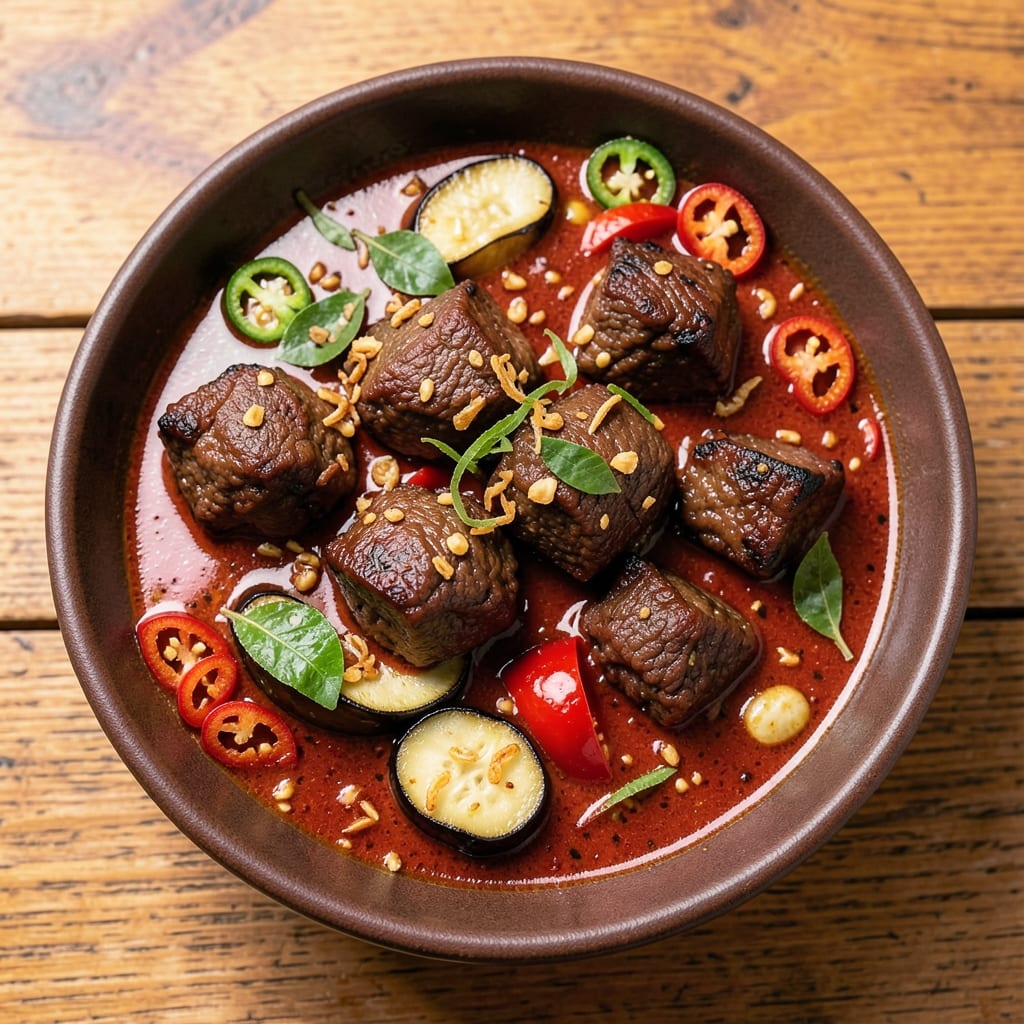
This authentic Thai red beef curry brings the bold, smoky flavors of a Bangkok street stall into your kitchen—rich with galangal, kaffir lime, and Thai chilies. The secret lies in slow-simmered spices that meld into a velvety coconut base, creating layers of heat and sweetness. I’ve perfected this recipe over years of testing, ensuring every bite delivers the balance of complex, aromatic depth that defines Thai cuisine.
The process starts with toasted spices—cumin, coriander, and lemongrass—that form the foundation of the curry paste. Fresh ingredients like galangal (ginger’s aromatic cousin) and kaffir lime leaves infuse the coconut milk with citrusy brightness, while Thai chilies add controlled heat. Simmering the beef until tender transforms tough cuts into melt-in-your-mouth pieces, all swimming in a sauce that’s both creamy and deeply savory.
By the time you serve this curry over fragrant jasmine rice, you’ll have a dish that’s restaurant-worthy yet approachable for home cooks. The aroma alone—smoky, citrusy, and coconut-rich—will have everyone at the table asking for seconds. This isn’t just a recipe; it’s an experience that transports you to Thailand with every spoonful.
Pair it with a crisp cucumber salad to cut through the richness or serve with warm naan for dipping. The beauty of this curry is its versatility—adjust the heat to your preference, and let the flavors develop slowly for maximum depth. Ready to master the art of Thai red curry? Let’s begin.
Ingredients for authentic thai red beef curry
Authentic Thai flavors start with these 15 essential ingredients—smoky, citrusy, and deeply savory.
| Ingredient | Amount | Notes |
|---|---|---|
| Beef Chuck Roast 🥩 | 1 ½ lb | Cut into 1-inch cubes |
| Coconut Milk 🥥 | 1 can | Full-fat, 13.5 oz can |
| Red Curry Paste 🌶️ | 3 tbsp | Authentic Thai brand preferred |
| Galangal 🌿 | 1 piece | 3-inch, peeled and sliced |
| Kaffir Lime Leaves 🍋 | 4 whole | Lightly bruised |
| Thai Bird's Eye Chilies 🔥 | 2 whole | Adjust for heat preference |
| Lemongrass 🌿 | 1 stalk | Bruised and cut into 2-inch pieces |
| Garlic Cloves 🧄 | 6 cloves | Minced |
| Shallots 🧅 | 3 whole | Minced |
| Fish Sauce 🍶 | 1 tbsp | Red Boat brand preferred |
| Brown Sugar 🍚 | 2 tbsp | Packed |
| Fresh Cilantro 🌿 | ¼ cup | Chopped, for garnish |
| Jasmine Rice 🍚 | 1 ½ cups | Uncooked, for serving |
| Vegetable Oil 🫒 | 2 tbsp | For sautéing |
| Salt 🧂 | 1 tsp | Kosher or sea salt |
The galangal and kaffir lime leaves are absolute game-changers. Asian markets carry fresh galangal (it looks like ginger but smells like citrus), and Thai grocery stores often sell kaffir lime leaves in little packages. If you can't find them, substitute ginger and lime zest—though it won't be quite the same. The red curry paste? Maesri or Mae Ploy are my go-tos. Skip the pre-made jarred versions—they lack the depth of authentic brands. For the beef, chuck roast stays tender while absorbing all those rich flavors. Look for good marbling at Costco or Whole Foods if you want to splurge on quality.
No galangal? Ginger plus 1 tsp lime zest works in a pinch, but you'll miss that unique piney flavor. Out of kaffir lime leaves? Lime zest plus a bay leaf mimics the citrus notes. The Thai chilies are non-negotiable for authentic heat—don't swap them for jalapeños unless you want a milder, sweeter curry. For the fish sauce, Red Boat is the gold standard, but any reputable brand will do. If you're avoiding fish sauce, soy sauce plus a pinch of sugar gets you close. The coconut milk should be full-fat—light versions won't give you that creamy, velvety texture.
This curry tastes even better the next day as all the flavors meld together. Store leftovers in an airtight container in the fridge for up to 5 days or freeze for 3 months. I always make a double batch—it's perfect for meal prep. The rice? Cook it ahead and reheat with a splash of water. Garnish with fresh cilantro right before serving—it adds that final bright, herbaceous note. And trust me, the aroma alone will have your whole house smelling like a Bangkok street stall.
Why You'll Love This Recipe
- One-Pot Magic: I swear by this recipe—just sear the beef, toss in the curry paste and coconut milk, and let it simmer. No chopping, no fuss, and that galangal? It’s the secret that turns this into a restaurant-quality dish without the stress.
- Deep, Balanced Heat: The red curry paste gives it that signature spicy-sweet kick, but the coconut milk smooths it out just right. Between us, the kaffir lime leaves add this bright, citrusy depth that makes it taste like I actually traveled to Thailand.
- Meal Prep MVP: This curry only gets better the next day—perfect for batch cooking. Serve it over rice for lunch, toss it in wraps for dinner, or even freeze half for when you’re too tired to cook. (Yes, even on a Tuesday night.)
- Budget-Friendly Feast: Beef chuck roast is affordable, and a single can of coconut milk stretches across multiple meals. I’ve made this for date nights, family dinners, and lazy Sundays—it’s the kind of dish that feels special without breaking the bank.
Step-by-step instructions for authentic Thai red beef curry
Here's how to craft restaurant-quality Thai red curry with deep, smoky flavors and perfect texture.
Prepare the Aromatics and Protein
Start by cutting the 1.5 lb Beef Chuck Roast into 1-inch cubes—this size ensures even cooking and tender results. In a small bowl, combine the minced garlic cloves, minced shallots, and 1 tsp salt. Set aside for now.
Next, prep the aromatic ingredients: Peel and slice the 3-inch galangal into ¼-inch thick pieces, lightly bruise the 4 whole kaffir lime leaves, and bruise the 1 stalk lemongrass by pounding gently with the side of your knife. Remove the seeds from the 2 whole Thai Bird's Eye Chilies and slice them into ¼-inch rings—adjust the quantity if you prefer milder heat.
Build the Curry Base
Heat the 2 tbsp vegetable oil in a large, heavy-bottomed pot over medium-high heat. Add the garlic-shallot-salt mixture and sauté for 2-3 minutes until fragrant but not browned. This step develops the aromatic foundation of your curry.
Reduce the heat to medium, then add the 3 tbsp red curry paste and stir continuously for 1-2 minutes until it darkens slightly and releases its deep, earthy aroma. Be careful not to let it burn—this is where the authentic Thai flavor develops. Add the galangal, kaffir lime leaves, lemongrass, and sliced Thai Bird's Eye Chilies, stirring for another 30 seconds to bloom their flavors.
Sear the Beef and Simmer
Increase the heat to medium-high and add the cubed beef in a single layer. Let it sear undisturbed for 2-3 minutes until browned on all sides—this step is crucial for building depth of flavor. Stir the beef and cook for another 3-4 minutes until it begins to turn opaque.
Pour in ½ of the canned coconut milk (about 6-7 oz) and stir well to combine. Bring the mixture to a gentle simmer, then reduce heat to low. Let it cook uncovered for 15 minutes, stirring occasionally, until the beef is tender and the sauce begins to thicken slightly. This slow simmer allows the flavors to meld beautifully.
Finish with Coconut Milk and Seasonings
Add the remaining ½ can coconut milk, 1 tbsp fish sauce, and 2 tbsp packed brown sugar. Stir well to combine, then increase the heat to medium-low and let the curry simmer uncovered for 10-15 minutes until the sauce thickens to a rich, velvety consistency. You'll see the oil begin to separate slightly at the top, which is a good sign—this indicates a well-balanced sauce.
Taste and adjust the seasoning if needed. The curry should be balanced with sweet, sour, salty, and spicy flavors. If it needs more heat, add a pinch of salt or a dash of fish sauce. If it needs more sweetness, add a touch more brown sugar. Remove from heat and let it sit for 5 minutes to allow the flavors to fully develop.
Serve with Jasmine Rice
Cook the 1.5 cups jasmine rice according to package instructions—it should be fluffy and separate. To serve, ladle the curry over the rice, garnishing each portion with ¼ cup chopped fresh cilantro. The curry should be rich, aromatic, and perfectly balanced with tender beef and a luscious coconut sauce.
Serve immediately with extra kaffir lime leaves or Thai Bird's Eye Chilies on the side for those who want to adjust the heat to their preference. This authentic Thai red curry is all about harmony—smoky, spicy, sweet, and creamy all in one perfect bite.
Pro Tips For Making Authentic Thai Red Beef Curry
- Bloom the Paste First: I used to toss the red curry paste straight into the pot with the oil, and it always tasted flat. Now I bloom it for 3-4 minutes on medium heat first—just until it fragrant and slightly darkened. This releases the spices' oils and builds the flavor foundation before anything else hits the pan.
- Slice Galangal Thin: Skip the pre-grated stuff from jars—it’s often dried out or too fine. Fresh galangal needs to be sliced paper-thin (about 1/16-inch) so it softens without turning to mush. A sharp knife and steady hand make this easier than it sounds.
- Simmer Slow and Low: The beef chuck roast won’t fall apart if you rush it. After adding the coconut milk, reduce heat to the lowest setting that keeps a gentle simmer—just enough to see tiny bubbles break the surface. This keeps the curry creamy and the beef tender without curdling the milk.
- Toast the Kaffir Lime Leaves: Toss the leaves in dry pan for 10 seconds until fragrant—it’s subtle but makes a real difference. This step prevents bitterness and deepens their citrusy aroma. Just don’t walk away; they burn faster than you’d think.
Storing and reheating your authentic thai red beef curry
Refrigerator Storage
Let your curry cool to room temperature (about 1 hour) before transferring to an airtight glass container—I use Le Creuset stoneware for its heat retention. Store in the fridge for up to 5 days, but the flavors actually deepen after 24 hours as the spices meld. The coconut milk may separate slightly, but a quick stir before reheating brings it back together. 🥥
Freezer Prep Tips
For longer storage, portion the curry into quart-sized freezer bags (lay them flat to save space) and freeze for up to 3 months. Leave 1-inch headspace to prevent expansion cracks. When ready to use, thaw overnight in the fridge—never microwave directly from frozen. The texture remains creamy, though the sauce may thicken slightly after freezing.
Stovetop Reheating
My preferred method: Transfer curry to a heavy-bottomed pot and heat over medium-low heat for 10-15 minutes, stirring occasionally. Add 1-2 tbsp water or coconut milk if the sauce looks too thick. Taste and adjust seasoning—it often needs a pinch of fish sauce or brown sugar after reheating. Keep heat low to prevent curdling. 🔥
Microwave Safety
For quick reheating, transfer curry to a microwave-safe dish and heat in 1-minute intervals on 70% power, stirring between each interval. Cover loosely with a microwave-safe lid to retain moisture. Avoid full power—it can make the coconut milk split or the beef dry out. Stir vigorously before serving to redistribute any separated oils.
Rice Handling
Cook extra jasmine rice and store it separately in an airtight container for up to 4 days. Reheat rice in a steamer basket or covered pot with 2 tbsp water over medium heat for 3-4 minutes. The key is keeping the rice dry—excess moisture turns it mushy. Serve reheated curry over freshly steamed rice for the best texture contrast. 🍚
Garnish Fresh
Always add fresh cilantro and a squeeze of lime right before serving—these brighten the flavors after reheating. If storing leftovers, keep garnishes separate until ready to eat. For extra aroma, crush a kaffir lime leaf** over the curry before serving. The fresh herbs and citrus cut through any reheating staleness beautifully. ✨
Nutrition facts
Frequently asked questions
Why does authentic Thai red curry need galangal and kaffir lime leaves?
These ingredients are the soul of Thai red curry! Galangal adds a piney, citrusy aroma that ginger can't replicate, while kaffir lime leaves bring bright, floral notes. Together, they create that signature Thai balance of sweet, sour, spicy, and umami. Skip them, and you'll miss the authentic depth—though ginger plus lime zest works in a pinch.
Can I use regular ginger instead of galangal?
Yes, but expect a milder flavor. For every 1-inch piece of galangal, use 1-inch ginger plus 1 tsp lime zest. The texture will be different too—galangal has a rougher, more fibrous quality. If you're in a hurry, this combo works, but true galangal lovers will notice the difference.
What's the secret to balancing the flavors?
Taste as you go! Start with the fish sauce for saltiness, brown sugar for sweetness, and adjust heat with Thai chilies. The key is balance: The sauce should taste complex, not one-note. Let it simmer uncovered—the coconut milk will reduce slightly, intensifying the flavors. Trust your palate, and don't be afraid to tweak!
Why does my curry taste too spicy or not spicy enough?
Thai curries rely on layered heat. If it's too spicy, add 1 tsp brown sugar or coconut milk to mellow it. For more heat, add ½ tsp fish sauce or a sliced Thai chili. Remember: The chilies should be sliced (not minced) to control heat distribution. Adjust gradually—you can always add more, but you can't take it out!
What's the best cut of beef for this recipe?
Chuck roast is ideal—it's flavorful and stays tender when slow-cooked. Other good options: brisket, short ribs, or even flank steak (cut thin). Avoid lean cuts like sirloin, as they'll dry out. If using pre-cut beef, trim excess fat to avoid a greasy sauce. For extra richness, marinate the beef in fish sauce and lime juice for 30 minutes before cooking.