
Main Courses
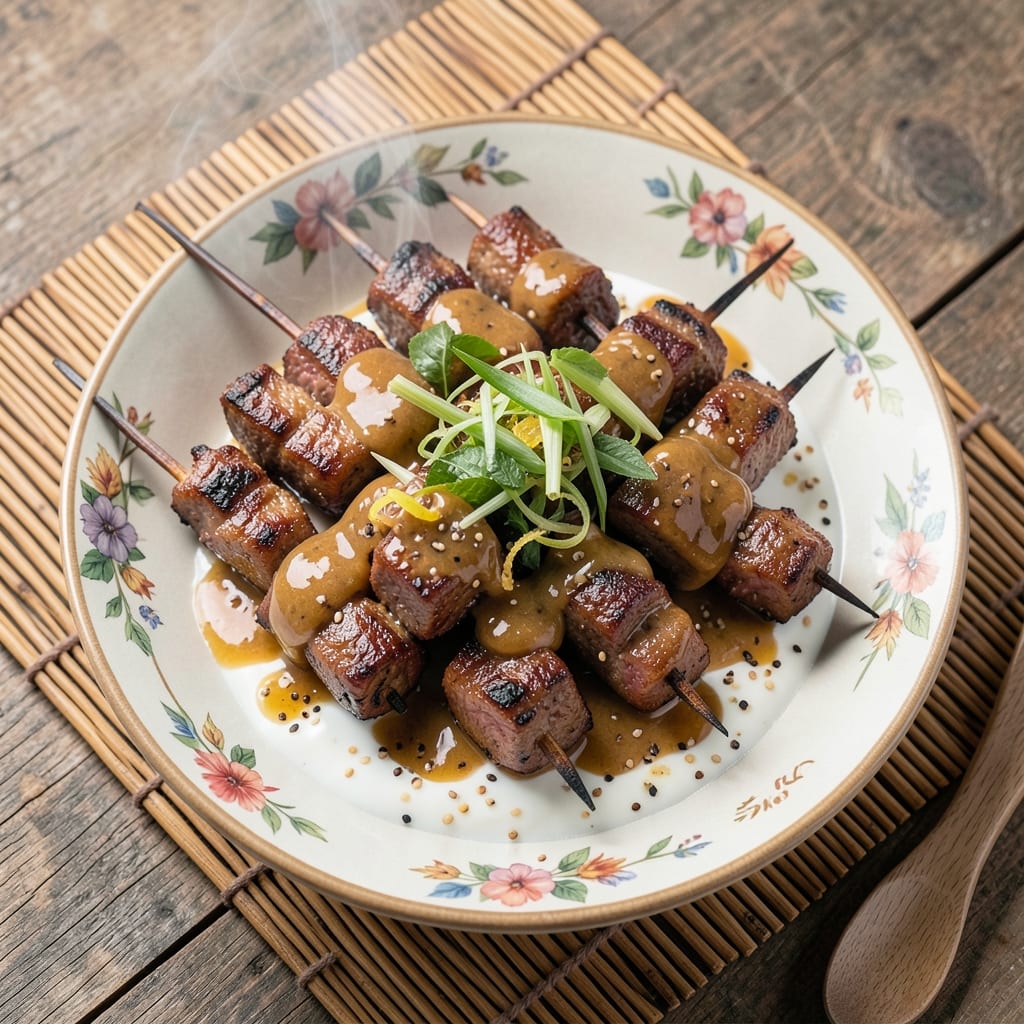
This authentic Thai beef satay recipe delivers restaurant-quality skewers with smoky char and a creamy peanut sauce that balances sweet, spicy, and nutty flavors. The secret lies in a marinade blend of lemongrass, galangal, and kaffir lime leaves—traditional aromatics that tenderize the beef while infusing it with complex depth. I developed this version after years of testing, ensuring every skewer achieves that signature caramelized crust without drying out.
The process begins with a two-part marinade: a wet blend of coconut milk and spices, plus a dry rub of ground coriander and turmeric. Skewering the beef on bamboo sticks (or metal for grilling) ensures even cooking, while the grilling method—whether over charcoal, a gas grill, or even a broiler—creates those coveted grill marks. The peanut sauce, made with smooth peanut butter, coconut milk, and a touch of tamarind, ties everything together with its velvety texture and subtle heat.
What sets this recipe apart is the authenticity without compromise: the marinade develops flavor overnight, the skewers cook to medium-rare perfection, and the sauce achieves that perfect balance of richness and acidity. Serve with steamed jasmine rice, cucumber slices, and lime wedges for a complete Thai dining experience. This is the version I've perfected over countless gatherings—guaranteed to impress even the most discerning satay lovers.
For modern convenience, I've included tips for pre-marinating and grilling shortcuts, but the core techniques remain true to tradition. The result? Skewers so flavorful they disappear from the plate, paired with a sauce that's creamy yet bright. Let's get cooking—your taste buds will thank you.
Ingredients for authentic thai beef satay
Authentic Thai flavors start with these carefully chosen ingredients—each playing a role in that perfect balance of smoky, sweet, and spicy.
| Ingredient | Amount | Notes |
|---|---|---|
| Beef Sirloin 🥩 | 1 ½ lb | Cut into 1-inch cubes, boneless |
| Lemongrass 🌿 | 1 whole | White part only, finely chopped |
| Galangal 🌿 | 1 inch | Fresh root, peeled and sliced thin |
| Kaffir Lime Leaves 🍋 | 4 whole | Torn into strips (or 2 tbsp dried) |
| Coconut Milk 🥥 | ½ cup | Full-fat canned for richness |
| Fish Sauce 💧 | 2 tbsp | Red Boat brand preferred |
| Brown Sugar 🍬 | 2 tbsp | Light or dark, packed |
| Ground Coriander 🌿 | 1 tbsp | Freshly ground preferred |
| Ground Turmeric 🧡 | 1 tsp | Fresh root preferred |
| Bamboo Skewers 🪵 | 16 whole | Soaked in water 30 mins |
| Smooth Peanut Butter 🥜 | ½ cup | Natural, unsweetened |
| Tamarind Paste 🍋 | 1 tbsp | Or 1 tbsp lime juice |
| Soy Sauce 🍶 | 1 tbsp | Light or dark |
| Garlic Cloves 🧄 | 4 cloves | Minced or pressed |
| Thai Chili Paste 🌶️ | 1 tbsp | Adjust for heat preference |
The aromatics are non-negotiable here. Lemongrass and galangal should be fresh—dried just won't cut it. I grab mine at Asian markets (or the international aisle at Whole Foods), where they're often sold pre-trimmed. For galangal, look for firm, yellowish roots with no mold—it's the backbone of the marinade's earthy depth. Kaffir lime leaves? Trader Joe's carries them frozen, which works in a pinch. The beef matters too—sirloin stays tender while holding up to grilling, but chuck works if you're making a bigger batch. Cut it into even 1-inch cubes so they cook uniformly.
No galangal? Ginger at half the amount is the closest substitute, though it won't be identical. Running out of tamarind? Lime juice plus 1 tsp sugar mimics the tangy-sweet profile. For the peanut sauce, natural peanut butter is a must—skip the sweetened kind. The chili paste can be swapped for sambal oelek (start with 1/2 tbsp and adjust). And if you're short on skewers, metal or soaked wooden sticks work just as well. The marinade develops overnight, so don't rush it—flavor builds in those hours. Trust me on this.
Marinated beef keeps 3 days in the fridge, fully submerged in the marinade. The peanut sauce? 5 days in a sealed jar, though I always make extra—it disappears fast. For grilling, work in batches to avoid overcrowding. If using bamboo skewers, soak them 30 minutes before assembly to prevent burning. Leftovers? Reheat gently in a skillet—no microwave, or the sauce gets rubbery. These skewers reheat beautifully, so double the batch and freeze half for lazy weeknights.
Why You'll Love This Recipe
- One-Pot Magic: The galangal and lemongrass simmer right in the coconut milk—no extra pots, no fuss. I just toss everything in one pot, let it bubble, and boom: rich, aromatic sauce ready in 20 minutes. (Yes, even on a Tuesday night.)
- Taste Like a Trip: That first bite of charred beef skewered with the creamy, citrusy sauce? It’s like Thailand showed up on my kitchen counter. The kaffir lime leaves add this bright, floral punch that makes ordinary weeknights feel special.
- Skewers for Everyone: Grill them for dinner, pack them for lunch, or serve them at a BBQ—this recipe works anywhere. I’ve made it for date nights, potlucks, and even my kid’s soccer team snacks. The marinade keeps the beef juicy, so it’s foolproof for any crowd.
- Leftovers That Don’t Suck: The sauce actually gets better the next day—thicker, deeper, and just as crave-worthy. I freeze half the skewers and thaw them for quick meals, or use the leftover sauce for stir-fries. No waste, all flavor. (Budget win!)
Step-by-step instructions for authentic Thai beef satay
Here's how to create restaurant-quality satay with deep, aromatic flavors and perfectly charred skewers.
Marinate the Beef for Maximum Flavor
In a large bowl, combine the 1.5 lb beef sirloin cut into 1-inch cubes, the finely chopped white part of 1 whole lemongrass, the thinly sliced 1-inch galangal, the torn 4 whole kaffir lime leaves, 0.5 cup coconut milk, 2 tbsp fish sauce, 2 tbsp brown sugar, 1 tbsp ground coriander, 1 tsp ground turmeric, the minced 4 cloves garlic, and 1 tbsp Thai chili paste. Mix thoroughly until the beef is fully coated in the marinade.
The key here is patience—let the beef marinate for at least 4 hours, or ideally overnight in the refrigerator. This allows the flavors to deeply penetrate the meat, creating that signature Thai balance of sweet, sour, salty, and spicy. I like to press the marinade into the beef with my hands to ensure every cube gets infused.
Prepare the Skewers and Grill Setup
Soak the 16 whole bamboo skewers in water for 30 minutes to prevent burning during grilling. Thread the marinated beef onto the skewers, arranging the cubes evenly for balanced cooking. For the best results, leave a small gap between each cube to allow the peanut sauce to coat them later.
Preheat your grill or grill pan to medium-high heat, around 400°F. The skewers should sizzle immediately when placed on the grill, creating that signature charred exterior. If using a grill pan, make sure it's well-oiled to prevent sticking. I always recommend working in batches to avoid overcrowding, which can lower the grill temperature and steam the beef instead of searing it.
Grill the Skewers to Perfect Doneness
Grill the skewers for 2-3 minutes per side, turning carefully with tongs, until the beef is deeply browned with visible grill marks and reaches an internal temperature of 145°F. The skewers should feel firm to the touch but still yield slightly when pressed with tongs. Avoid piercing the meat with a fork, as this can cause juices to escape and dry out the beef.
Here's where the magic happens: the charred exterior should contrast beautifully with the tender, juicy interior. If you notice the skewers are browning too quickly, move them to a cooler part of the grill. The goal is to achieve that perfect balance of smoky, caramelized crust without burning the outside. Once done, transfer the skewers to a plate and tent loosely with foil to keep them warm.
Prepare the Peanut Sauce
In a small saucepan, combine the 0.5 cup smooth peanut butter, 1 tbsp tamarind paste, 1 tbsp soy sauce, and 2 tbsp brown sugar. Cook over medium-low heat, stirring constantly, until the mixture is smooth and creamy, about 3-5 minutes. If using tamarind paste, you may need to add 1-2 tablespoons of water to help it dissolve and create a pourable consistency.
Once the sauce is smooth, remove it from heat and let it cool slightly. The sauce should be thick but still able to coat the back of a spoon. If it's too thick, thin it with a splash of coconut milk or water. This sauce is the heart of satay—it should be rich, nutty, and perfectly balanced with a touch of tanginess from the tamarind.
Serve with Style and Enjoy
Drizzle the warm peanut sauce generously over the grilled skewers, allowing it to cascade down the sides. Serve immediately with steamed jasmine rice and a side of quick-pickled vegetables for that authentic Thai experience. The contrast of the smoky, charred beef with the creamy, slightly tangy peanut sauce is what makes this dish so irresistible.
For an extra touch, garnish with additional torn kaffir lime leaves and a sprinkle of crushed peanuts on top of the sauce. The lime leaves add a bright, citrusy note, while the peanuts provide texture and a nutty crunch. Each bite should deliver a perfect harmony of flavors—sweet, spicy, savory, and umami—all balanced just right. Enjoy with a cold Thai iced tea or beer for the full experience!
Pro Tips For Making Authentic Thai Beef Satay
- Pound the Galangal: I learned this the hard way—skipping the galangal prep ruins the depth of flavor. Use a mortar and pestle to crush the galangal before slicing it, then finely chop. The released oils make a real difference when simmered with lemongrass and coconut milk.
- Marinate Overnight: Beef sirloin needs time to absorb the satay paste. I used to rush it and wondered why the flavor felt flat. At least 8 hours—overnight is even better—lets the spices penetrate deeply. Cover tightly and refrigerate.
- Simmer Coconut Milk Low: After burning three batches of coconut milk, I finally figured out: low heat only. Keep it at a gentle simmer (tiny bubbles, no splattering) for 20 minutes. High heat turns it grainy and ruins the creamy texture.
- Skewer Evenly: Uneven skewers = uneven cooking. Cut the beef into equal-sized cubes (about 1.5 inches) and thread them onto skewers with space between each piece. Crowd them, and the center stays raw while the edges overcook.
Regional styles of this dish
Central Thai Style
This version stays true to Bangkok's street food roots, where satay skewers are grilled over charcoal for maximum smokiness. I use bamboo skewers for that authentic experience, but if you're grilling indoors, soaked wooden or metal skewers work perfectly. The marinade here leans heavier on fish sauce and brown sugar—about 2 tbsp each—to create that signature Thai balance of salty-sweet. Serve with a side of quick-pickled cucumbers (thinly sliced cucumbers tossed with 1 tbsp rice vinegar, 1 tsp sugar, and a pinch of salt) to cut through the richness. 🌶️
For the peanut sauce, I add a splash of Thai iced tea concentrate (about 1 tsp) to deepen the flavor profile. This Central Thai twist is what you'd find at street food stalls—bold, smoky, and packed with umami. Garnish with crushed roasted peanuts and Thai basil for that extra layer of authenticity. The key is keeping the sauce smooth but not too sweet—adjust the brown sugar to taste.
Northern Thai (Lanna) Version
Northern Thailand's Lanna region brings a herb-forward approach, using lemongrass stems (not just the white part) and adding fresh turmeric (about 1 tbsp grated) to the marinade. The beef here is often marinated for longer—up to 24 hours—to let the earthy flavors penetrate deeply. I swap out kaffir lime leaves for extra galangal (about ½ inch more) to intensify the aromatic profile. The skewers are grilled over hardwood charcoal for a deeper smoky flavor, which is essential in this region's cuisine. 🔥
The peanut sauce gets a spicier kick in Lanna style—add 1 extra tbsp of Thai chili paste and a pinch of white pepper for complexity. Serve with sticky rice instead of jasmine rice, and add a side of steamed bitter melon (a Northern Thai staple) to balance the richness. The heat level here is more pronounced, so adjust the chili paste to your preference. This version is heartier and more aromatic than its Central Thai counterpart.
Southern Thai (Muslim-Influenced)
Southern Thailand's satay reflects Malay and Muslim influences, with a lighter, tangier marinade. I reduce the fish sauce to 1 tbsp and add 1 tbsp tamarind paste to the marinade for brightness. The skewers are often made with chicken or lamb in this region, but beef works beautifully too. The key is using more coconut milk (about ½ cup) in the marinade to keep the meat tender. For grilling, I prefer indirect heat to avoid over-charring, as Southern Thai cuisine tends to favor subtler smoky flavors. 🥥
The peanut sauce here is lighter and less sweet, with lemon juice (instead of tamarind) and a touch of cinnamon (about ¼ tsp). Serve with cucumber slices, sambal belacan (a shrimp paste condiment), and steamed rice. This version is perfect for those who prefer a tangier, less heavy satay experience. The skewers are often served with a side of spicy tomato chutney for dipping, adding another layer of complexity.
Modern Fusion Twist
For a contemporary take, I like to add 1 tbsp of miso paste to the marinade for umami depth, along with 1 tsp of smoked paprika for a subtle smoky note. The skewers are grilled as usual, but the peanut sauce gets a modern upgrade: blend in ½ cup of Greek yogurt for creaminess and a touch of honey (about 1 tsp) to balance the heat. This fusion version pairs beautifully with roasted sweet potatoes and a side of avocado slices. The result is a satay that bridges Thai tradition with global flavors—perfect for adventurous eaters. ✨
Nutrition facts
Frequently asked questions
Can I use chicken or pork instead of beef for this recipe?
This marinade works beautifully with chicken thighs (they stay juicier) or pork tenderloin. For chicken, reduce marinating time to 2-4 hours since it cooks faster. Pork should marinate overnight for maximum tenderness. The grilling time will vary—chicken cooks in 2 minutes per side, while pork may need 3-4 minutes per side for medium doneness.
What's the best way to store leftover satay?
Store cooked satay in an airtight container in the fridge for 3-4 days. For longer storage, freeze the skewers (without sauce) for up to 3 months. Reheat gently in a skillet with a splash of water or coconut milk to restore moisture. Never microwave—it makes the sauce rubbery! The peanut sauce keeps separately for 5 days in the fridge.
Why do my skewers fall apart when grilling?
This usually happens when the beef isn't marinated long enough or the skewers are overcrowded. First, ensure the beef marinates at least 4 hours (overnight is ideal). Second, use soaked bamboo skewers and don't overfill them—leave small gaps between cubes. Grill in batches over medium-high heat to avoid steaming instead of searing. If using metal skewers, make sure they're sturdy enough to hold the beef.
Can I make the peanut sauce ahead of time?
Yes! The peanut sauce actually tastes better after resting. Make it 1 day ahead and store in an airtight jar in the fridge. Stir well before using and thin with a splash of coconut milk if it thickens. For extra flavor, add 1 tsp of Thai iced tea concentrate when reheating. The sauce can also be frozen for 3 months—just thaw and stir before serving.
What's the secret to getting perfect grill marks?
Preheat your grill to 400°F and make sure it's clean and well-oiled. Arrange the skewers with space between them to allow airflow. For charcoal grills, use hardwood (like coconut or fruitwood) for authentic smoky flavor. Press the skewers down firmly when placing them on the grill to create good contact. If using a grill pan, heat it until smoking hot before adding the skewers. Rotate them 45 degrees after 1 minute for those diagonal marks!