
Soups & Stews
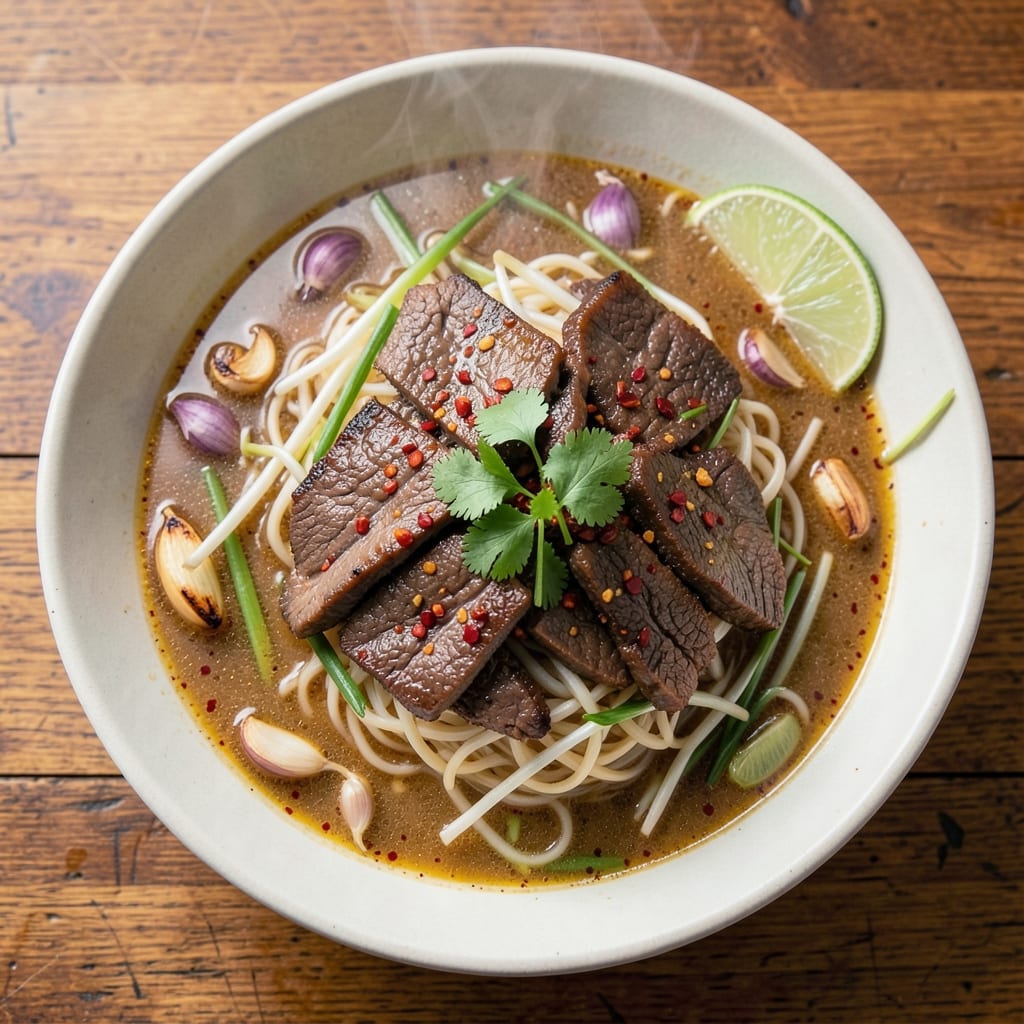
Authentic Thai beef noodle soup transforms a simple pot into a fragrant, flavor-packed masterpiece that captures the heart of Thai cuisine. The secret lies in charring aromatic roots—lemongrass, galangal, and shallots—until they release their deep, earthy essence into the broth. This isn’t just soup; it’s a symphony of sweet, sour, spicy, and umami notes that balance perfectly with tender beef and slippery rice noodles.
What sets this recipe apart is the traditional technique of building flavor in layers: first the aromatic paste, then the simmered broth, and finally the finishing touches of fish sauce, lime, and fresh herbs. The broth should be rich yet light, with just enough heat to wake up your palate without overpowering. Every spoonful delivers complexity—herbal, citrusy, and deeply satisfying—that makes store-bought versions taste like a pale imitation.
By the time you serve this, your kitchen will smell like a bustling Bangkok street market, and every bite will transport you there. The beef becomes fork-tender, the noodles soak up the fragrant broth, and the garnish of fresh cilantro, Thai basil, and lime brightens each mouthful. This is the kind of dish that disappears faster than you can say "mai pen rai" (no problem).
Perfect for weeknight dinners or impressing guests, this recipe scales beautifully while keeping the soul of authentic Thai cooking intact. The key is patience—letting the broth develop its depth and the flavors meld into harmony. Let’s get cooking.
Ingredients for authentic thai beef noodle soup
Fragrant roots, tender beef, and slippery noodles—this is what transforms a pot into Thai magic.
| Ingredient | Amount | Notes |
|---|---|---|
| Thinly Sliced Beef 🥩 | 1 lb | Flank steak or sirloin preferred |
| Rice Noodles 🍜 | 8 oz | Flat, medium-width, dried |
| Lemongrass Stalks 🌿 | 3 whole | Bruised and cut into 2-inch pieces |
| Galangal 🌿 | 1 piece | About 3 oz, peeled and sliced |
| Shallots 🧅 | 4 whole | Peeled and halved vertically |
| Garlic Cloves 🧄 | 6 cloves | Peeled and smashed |
| Coconut Milk 🥥 | 1 can | Full-fat, 13.5 oz can |
| Beef Broth 💧 | 4 cups | Homemade or good-quality store-bought |
| Fish Sauce 🍶 | 2 tbsp | Red Boat preferred |
| Lime Juice 🍋 | 2 tbsp | Freshly squeezed |
| Sugar 🍚 | 1 tbsp | White or brown |
| Thai Chili Paste 🌶️ | 1 tbsp | Maesri or similar |
| Salt 🧂 | 1 tsp | Kosher or sea salt |
| Fresh Cilantro 🌿 | ¼ cup | Chopped, for garnish |
| Thai Basil 🌿 | ¼ cup | Chopped, for garnish |
The galangal and lemongrass are non-negotiable for that authentic Thai aroma. Asian markets have the best selection—look for fresh, fragrant stalks with no black spots. If you can't find galangal, ginger at half the amount works in a pinch, but it won't be the same. The beef should be thinly sliced against the grain for maximum tenderness. I always grab flank steak or sirloin from the butcher counter—it's lean but flavorful. For the noodles, rice noodles from the Asian aisle are a must; the ones in the regular pasta section just won't cut it.
No fish sauce? Soy sauce plus a dash of anchovy paste gets you close, but it won't be authentic. The Thai chili paste can be swapped for sriracha at half the amount if you're in a hurry, but Maesri or Maesri Sriracha is worth seeking out. Coconut milk matters—full-fat only. Light versions won't give you that creamy richness. Fresh herbs? Thai basil and cilantro are essential for that bright finish. If you can't find Thai basil, regular basil plus a pinch of cinnamon helps, but it's not the same.
This broth keeps beautifully—3-4 days in the fridge or 3 months frozen. I always make extra and freeze it in portions for quick meals. The noodles cook in 2 minutes—don't overdo it, or they'll turn mushy. Garnish with fresh herbs right before serving so they stay vibrant. Leftovers? Reheat gently with a splash of water to restore that silky texture.
Why You'll Love This Recipe
- No Knife Skills Needed: I swear by this recipe because the beef slices have to be thin—so thin they practically melt. No butchering required; grab pre-sliced beef from the grocery store’s Asian section, and you’re golden. (Yes, even on a Tuesday night.)
- Umami Bomb in a Bowl: That first sip? Chef’s kiss. The galangal and lemongrass simmer into the broth until it’s fragrant enough to wake up your taste buds. The beef soaks up all the flavor, turning tender without falling apart—like a warm hug in soup form.
- Budget Meal, Big Impact: Thinly sliced beef and rice noodles stretch for miles, but the galangal and lemongrass make it feel special. I’ll be real: it’s my go-to when I want restaurant-quality without the price tag. (And the shallots? They’re the secret weapon.)
Step-by-step instructions for authentic Thai beef noodle soup
Here's how to build that perfect balance of fragrant broth, tender beef, and delicate noodles.
Prepare the Aromatic Base
In a large pot, combine the 4 cups beef broth with the 3 whole lemongrass stalks (cut into 2-inch pieces) and 1 piece galangal (peeled and sliced). Bring to a gentle simmer over medium heat for 10 minutes to infuse the broth with those signature Thai aromas. You'll notice the broth developing a pale golden color and a subtle citrusy aroma from the lemongrass.
While the broth simmers, add the 4 whole shallots (halved vertically) and 6 cloves garlic (smashed). Let them cook for another 5 minutes until the shallots soften and the garlic becomes fragrant. This step builds the foundation of your soup's complex flavor profile - don't rush it. The longer these aromatics cook, the deeper the flavor will be.
Build the Rich Broth
Reduce heat to low and stir in the 1 can coconut milk, 1 tbsp Thai chili paste, 1 tbsp sugar, 1 tsp salt, and 2 tbsp fish sauce. Let the mixture simmer gently for 10-12 minutes, stirring occasionally. You'll see the coconut milk emulsify with the broth, creating a creamy, golden liquid. The chili paste will give it a subtle heat, while the fish sauce adds that unmistakable umami depth.
Taste the broth and adjust seasoning if needed. I usually add a little more fish sauce for saltiness or a touch more sugar to balance the acidity. This is where the magic happens - the perfect harmony of sweet, sour, salty, and spicy. The broth should be fragrant and rich, with just a hint of spice that makes your mouth water.
Cook the Beef and Noodles
Add the 1 lb thinly sliced beef to the simmering broth and cook for 3-4 minutes until the beef turns opaque and just begins to firm up. It's crucial not to overcook - you want it tender but still with some bite. Remove the beef with a slotted spoon and set aside.
In a separate bowl, soak the 8 oz rice noodles in hot water for 5-7 minutes until they're pliable but still slightly firm. Drain and add them to the broth. Return the beef to the pot and simmer together for 2-3 minutes just to heat through. The noodles should be tender but still hold their shape - they'll finish cooking in the hot broth.
Finish and Serve
Remove the pot from heat and stir in the 2 tbsp lime juice. This brightens the flavors and cuts through the richness of the coconut milk. Taste again and adjust seasoning if needed - you might want to add a little more fish sauce or lime for balance.
Ladle the soup into bowls and garnish with 0.25 cup chopped fresh cilantro and 0.25 cup chopped Thai basil. The contrast of fresh herbs against the rich broth is what makes this dish truly authentic. Serve immediately with extra lime wedges on the side - everyone will want to squeeze a little more lime into their bowl.
Pro Tips For Making Authentic Thai Beef Noodle Soup
- STEAM THE GALANGAL: I learned this the hard way—peeling galangal like ginger ruins the flavor. Instead, smash the whole stalk with the side of your knife (no peeling needed) and steam it for 5 minutes in boiling water first. This softens it enough to slice thinly later and keeps the soup from tasting like wet cardboard.
- SALT THE NOODLES WRONG: Soak your rice noodles in room-temperature water with a pinch of salt for 10 minutes, then drain and rinse. The salt helps them absorb water evenly, but the rinse keeps them from turning mushy when they hit the hot broth. (Yes, even if you’re impatient like me—this isn’t the step you can skip.)
- SEAR THE BEEF IN BATCHES: Crowding the pan turns your beef into sad, gray mush. Work in two batches over medium-high heat for 30 seconds per side—just until browned, not cooked through. The crust seals in juices, and the broth won’t turn cloudy from overcooked meat. (Your future self will thank you.)
- USE LEMONGRASS STALKS LIKE A ROD: Bruise the lemongrass stalks with the flat of your knife (not chop them) and tie them into a bundle with kitchen twine. Drop the whole thing into the broth to infuse flavor, then fish it out before serving—no straining, no bitterness. (Sounds weird, but it works: the oils stay intact, and you avoid lemongrass chunks in every bite.)
Wine and beer pairings for authentic thai beef noodle soup
Thai White Wine Pairing
A crisp, dry Thai-inspired white wine like Meiomi Pinot Grigio from California bridges the gap between the soup's coconut richness and herbal notes. Its citrusy acidity mirrors the lime juice, while a subtle mineral finish complements the galangal and lemongrass. I always reach for Thai Orchid Pinot Noir when I want something slightly bolder—its dark fruit balances the spice beautifully. 🍷
Light Beer Options
For beer lovers, a Thai-style lager like Singha or Leo cuts through the soup's creaminess without overpowering. Their clean, slightly malty profiles let the Thai flavors shine. If you prefer craft beers, try a wheat beer with citrus notes—Allagash White works wonders by enhancing the lime and chili. 🍺
Spicy Pairing Boost
If your soup leans spicy, a sweet, floral Riesling like Dr. Loosen Blue Slate cools the heat while adding honeyed depth. The wine's natural acidity also cleanses your palate between bites. For a non-alcoholic twist, sparkling yuzu soda (like San Pellegrino Yuzu) brings that same bright, citrusy lift. 🌶️
Coconut Milk Harmony
The coconut milk in the broth pairs perfectly with creamy, textured wines like Viognier or Chardonnay with minimal oak. Look for Louis Jadot Chardonnay—its buttery notes echo the coconut while the stone fruit flavors complement the beef. Avoid heavy, oaky whites that might clash with the soup's delicate balance. 🥥
Herb-Forward Garnish Tip
When serving, garnish your wine glass with a sprig of Thai basil or a lime wheel to tie the flavors together. The aroma alone enhances the dining experience, making each sip feel intentional. I often serve the soup with a small pitcher of chilled coconut water on the side for an extra refreshing touch. ✨
Nutrition facts
Frequently asked questions
Can I substitute galangal if I can't find it?
Yes, but expect a slightly different flavor. Use ginger at half the amount (about 1.5 oz) as a substitute, but know it won't replicate galangal's piney, citrusy notes. For authenticity, try Asian markets or order online—they often carry fresh galangal year-round.
How do I make the broth less spicy?
Reduce the Thai chili paste to ½ tbsp or omit it entirely. For extra mildness, add 1 extra tbsp sugar or 1 tbsp more lime juice to balance the heat. Taste as you go—you can always adjust with more broth or a splash of coconut milk.
Why does my beef turn rubbery?
Overcooking is the usual culprit! Cook the beef for only 3-4 minutes—it should be opaque but still slightly translucent in the center. For extra tenderness, slice the beef very thinly against the grain before cooking. If using tougher cuts like chuck, marinate in 1 tbsp fish sauce + 1 tbsp lime juice for 30 minutes beforehand.
Can I use chicken or pork instead of beef?
For chicken, use 1 lb boneless thighs or breast, sliced thinly, and reduce cooking time to 2-3 minutes. Pork works too—opt for lean cuts like tenderloin and cook for 4-5 minutes. Adjust fish sauce to taste (pork may need 1 extra tbsp for saltiness). The broth flavors will shine with any protein!
How do I store leftovers?
Store broth and beef separately in airtight containers for up to 3 days in the fridge. Reheat broth gently, then add noodles fresh (they’ll absorb liquid). For longer storage, freeze broth for 3 months—thaw overnight in the fridge. Noodles don’t freeze well, so cook them fresh when reheating.