
Main Courses
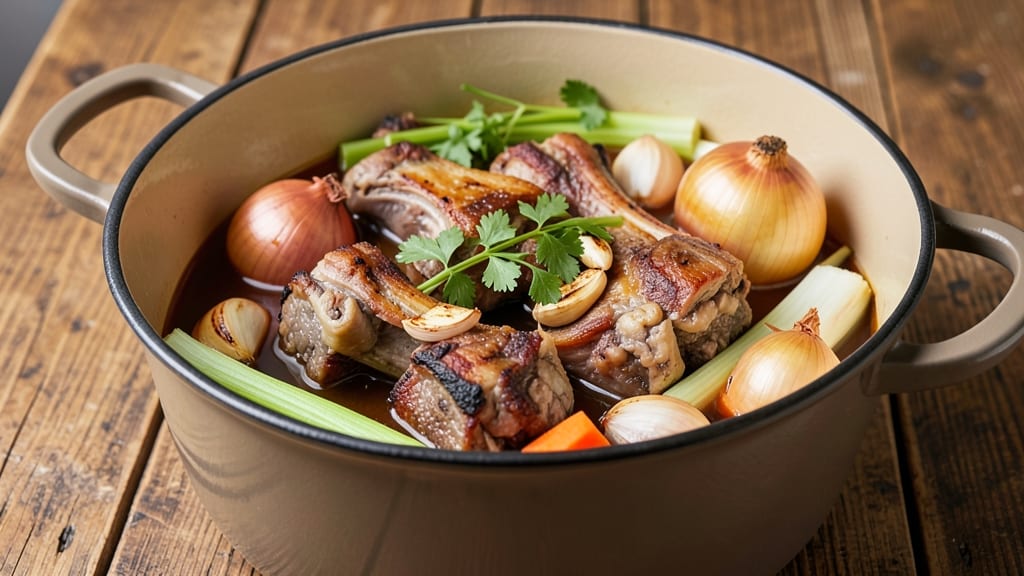
Alton Brown’s beef stock recipe transforms simple ingredients into a deep umami base that elevates every dish it touches. The secret lies in slow extraction—roasting bones first to deepen flavor, then simmering with aromatics for hours until the liquid becomes rich, golden, and impossibly fragrant.
I’ve made this exact recipe during holiday feasts, and it’s the foundation for everything from soups to braised meats.
The process is methodical but rewarding: cold water extraction ensures maximum gelatin release, while skimming foam and straining through cheesecloth yield a crystal-clear, intensely flavorful stock. Alton’s precision—like timing the simmer to avoid cloudiness—makes all the difference.
This isn’t just a stock; it’s a flavor multiplier that turns ordinary meals into extraordinary ones.
What makes this recipe stand out is its versatility—use it as a base for soups, deglaze pans for sauces, or braise tough cuts until they’re fork-tender. The result is a concentrated, restaurant-quality liquid that freezes beautifully for future use.
No more relying on store-bought versions when you can make this in your own kitchen.
Ready to master the art of stock-making? Here’s how to achieve restaurant-quality depth at home, step by step. The patience pays off—trust me, your taste buds will thank you.
Ingredients for alton brown beef stock
Four pounds of bones and simple aromatics transform into a rich, umami-packed foundation.
| Ingredient | Amount | Notes |
|---|---|---|
| Beef Bones 🦴 | 4 lb | Marrow and knuckle bones preferred |
| Yellow Onion 🧅 | 1 whole | Cut into quarters, peeled |
| Carrots 🥕 | 2 lb | Whole, scrubbed, cut into chunks |
| Celery Stalks 🥬 | 4 whole | Cut into 2-inch pieces |
| Garlic Cloves 🧄 | 6 cloves | Smashed, skin left on |
| Fresh Parsley Stems 🌿 | 8 whole | Tough stems only, tied in bundle |
| Fresh Thyme Sprigs 🌿 | 4 whole | Stems intact, tied in bundle |
| Fresh Bay Leaves 🍃 | 2 whole | Dried works in pinch |
| Black Peppercorns 🌶️ | 1 tbsp | Crushed lightly |
| Kosher Salt 🧂 | 2 tsp | Diamond Crystal preferred |
| Cold Water 💧 | 16 cups | Filtered preferred |
| Cheesecloth 🧺 | 1 sheet | For straining (or fine-mesh sieve) |
The bones are non-negotiable—marrow and knuckle bones unlock that deep, gelatinous richness. Costco or your butcher shop will have them if the grocery store doesn't. Look for bones with visible marrow cavities and a vibrant red color. If you're using pre-roasted bones from the store, give them a quick rinse to remove any dust or seasoning. For the aromatics, fresh herbs and vegetables are ideal, but don't stress if you need to use dried—just remember dried thyme is one-third the amount of fresh. The parsley stems add a subtle sweetness that rounds out the stock beautifully.
No fresh thyme? Dried thyme at one-third the amount works in a pinch. Short on bay leaves? A single leaf is potent—use half if you're worried. The water should cover the bones by about 1 inch. If you're making a larger batch, scale everything up proportionally—just keep the bone-to-water ratio at 1:4. For extra depth, some cooks add a splash of red wine or apple cider vinegar when roasting the bones, but it's not required. The key is patience: simmering uncovered allows the foam to rise and be skimmed, resulting in a crystal-clear, intensely flavorful stock.
This stock keeps for 5 days in the fridge or 6 months in the freezer. I portion mine into ice cube trays for easy single-use servings—just pop one into a pot when you need a quick flavor boost. For long-term storage, leave about an inch of headspace in the container. If you're freezing, use airtight containers or heavy-duty freezer bags. The stock will reduce slightly as it cools, so don't worry if it seems a bit concentrated when frozen. It's worth every minute of effort—trust me, your braised short ribs will thank you.
Why You'll Love This Recipe
- No-Fuss Simmer: I swear by the "dirt cheap" trick of just tossing onion, carrots, and celery into the pot with bones—no fancy peeling or chopping. The bones handle the heavy lifting while I sip coffee and scroll through my phone.
- Umami Goldmine: That first sip? Richer than any bouillon cube. The beef bones caramelize into deep, meaty layers while the garlic and celery add a bright, savory punch—like a hug for your taste buds.
- Soup-to-Stew Hero: Freeze half for next month’s beef stew or ramen. The other half? Perfect for braising short ribs or deglazing weeknight dinners. One pot, endless possibilities.
- Budget Magic: A pound of bones costs less than takeout, and the stock stretches across meals. Honestly, I make this every few months just to stock my freezer—it’s my go-to for frugal, flavor-packed cooking.
Step-by-step instructions for alton brown's beef stock
Here's how to build a rich, flavorful stock from scratch using classic techniques.
Prepare the Bones and Aromatics
Begin by examining the 4 lb beef bones—look for marrow and knuckle bones, which add incredible depth. Pat them dry with paper towels to remove any surface moisture, then place them in a large stockpot. This drying step is crucial; it prevents the stock from becoming cloudy during cooking.
Add the 1 whole yellow onion (cut into quarters), 2 lb carrots (cut into chunks), and 4 whole celery stalks (cut into 2-inch pieces) to the pot. These vegetables form the aromatic base known as mirepoix, providing sweetness, earthiness, and structure to the stock. Toss in the 6 smashed garlic cloves (skin left on), 8 whole fresh parsley stems (tied in a bundle), 4 whole fresh thyme sprigs, and 2 whole fresh bay leaves. These herbs will infuse the stock with bright, herbal notes.
Toast the Spices and Add Water
In a dry skillet over medium heat, lightly toast the 1 tbsp black peppercorns for about 1 minute until fragrant. This step deepens their flavor without burning them. Transfer the toasted peppercorns to the stockpot.
Add the 16 cups cold water to the pot, ensuring all ingredients are submerged. The cold water helps extract flavors more efficiently than hot water. Sprinkle in the 2 tsp kosher salt and give everything a gentle stir. The salt enhances the overall flavor profile and helps balance the stock.
Simmer Gently for Deep Flavor Extraction
Place the stockpot over medium-low heat and bring the liquid to a bare simmer. Here's the key: the temperature should never boil vigorously. A gentle simmer—small bubbles breaking the surface occasionally—is ideal. This slow cooking process allows the collagen in the bones to break down into gelatin, creating a rich, velvety texture.
Partially cover the pot with a lid, leaving a small gap for steam to escape. This helps prevent the surface from forming a skin, which can trap impurities. Simmer for 3 to 4 hours, skimming off any foam or impurities that rise to the surface with a fine-mesh skimmer or ladle. This ensures a crystal-clear stock.
Strain and Finish the Stock
After simmering, remove the pot from heat and let the stock sit for 10 minutes. This resting period allows any settled particles to sink to the bottom. Line a fine-mesh strainer with the 1 sheet cheesecloth or use a fine-mesh sieve, then carefully strain the stock into a clean container, discarding the solids.
The stock should now have a deep amber color and a rich, umami aroma. If you prefer an even clearer stock, you can chill it in the refrigerator overnight, then skim off any congealed fat that rises to the top. Store the stock in the refrigerator for up to 5 days or freeze it for longer storage. This versatile base will elevate soups, stews, risottos, and sauces to new heights.
Pro Tips For Making Alton Brown Beef Stock
- Brown the Bones First: Skip the raw bone soak—Alton’s recipe works best when you sear the bones in batches until deep brown. That crust packs serious flavor, and cutting them into 2-inch pieces first makes this easier (and faster) than wrestling whole bones. I used to rush this, and the stock always tasted flat—now it’s rich and caramelized.
- Chop Veggies Small: Dice onions, carrots, and celery into ¼-inch pieces, not rough chunks. Tiny bits infuse faster and dissolve into the stock instead of lingering as mushy bits. My first attempt used big celery stalks, and I ended up straining out more veg than broth—don’t make that mistake.
- Simmer, Don’t Boil: Keep the stock at a gentle simmer—tiny bubbles, just breaking the surface. Boiling scalds the collagen and makes the stock cloudy. I learned this after a marathon 12-hour cook turned my golden broth into a murky mess. Use a lid to maintain even heat, and resist the urge to peek too often.
- Strain Twice: Line your fine-mesh strainer with cheesecloth or a coffee filter for the final pass. It catches the last of the grit and fat, leaving you with crystal-clear stock. I skipped this once and served it with mashed potatoes—regrets. Takes 2 minutes but makes a world of difference.
Regional styles of these flavors
French Classic Approach
In France, beef stock is all about precision and patience. The classic method starts with roasting bones at 400°F for 30 minutes to deepen their flavor—something I’ve adopted for extra richness. French cooks often add a splash of red wine during roasting to enhance depth.
The stock is then simmered uncovered for 4-6 hours, with constant skimming to achieve crystal clarity. 🌟
Italian Rustic Style
Italian beef stock, or brodo di manzo, leans into simplicity and fresh herbs. Italians typically use a mix of marrow bones and veal shanks for extra gelatin. The key difference? They add fennel and leeks to the mirepoix for an anise-like sweetness.
The stock simmers for 3 hours*, then finishes with a handful of fresh parsley just before serving. This version is lighter but equally flavorful.
Spanish Sofrito Base
Spain’s caldo de huesos incorporates a sofrito*—a slow-cooked blend of tomatoes, garlic, and smoked paprika—into the stock. The paprika adds a subtle smokiness, while tomatoes contribute acidity.
I’ve found that adding 1 tbsp smoked paprika and ½ cup crushed tomatoes to the simmering liquid transforms the stock into a versatile base for paella or stews. The cooking time extends to 5 hours to meld these flavors fully.
American Southern Twist
Southern U.S. beef stock often includes okra and tomato leaves for a slightly tangy, earthy note. Okra thickens the stock naturally, while tomato leaves add a bright herbal touch.
The bones are usually simmered for 6-8 hours in a cast-iron pot, and the stock is finished with a pinch of cayenne pepper for a gentle kick. This version is a staple for gumbo and collard greens.
Japanese Dashi-Inspired
For a lighter but deeply umami take, Japanese-inspired beef stock incorporates dried shiitake mushrooms and kombu (seaweed). The kombu is removed after 10 minutes of simmering to avoid bitterness, while shiitakes add an earthy depth.
This stock is perfect for ramen or miso-based dishes. The total simmer time is 2-3 hours, with a focus on clarity and subtle complexity. 💫
Global Fusion Hybrid
My personal favorite fusion combines French roasting techniques with Italian herbs and a touch of Spanish smoked paprika. Start by roasting bones with 1 tbsp smoked paprika and 1 tsp coriander seeds, then proceed with the classic mirepoix.
Add 1 bay leaf and 2 sprigs of rosemary during simmering for a Mediterranean twist. This hybrid stock works for everything from French coq au vin to Italian risotto. 🌍
Nutrition facts
Frequently asked questions
Why does Alton Brown's recipe use cold water instead of hot?
Cold water extracts more gelatin from the bones, creating a richer, thicker stock. When you add cold water, the collagen breaks down more efficiently during the long simmer, resulting in a velvety texture that hot water simply can't match. This is why professional chefs swear by cold-water extraction.
Can I substitute chicken or pork bones for beef?
While you can make stock with other bones, the flavor profile changes dramatically. Beef bones provide a deep, meaty umami that's hard to replicate. If you're using pork, add extra aromatics like fennel or juniper berries to compensate. Chicken stock will be lighter and work better for poultry dishes.
How do I know when the stock is done?
The stock is ready when it has a deep amber color and smells intensely aromatic. The bones should feel soft when prodded with a spoon, and the liquid should coat the back of a spoon with a slight sheen. Simmering for 3-4 hours ensures maximum flavor extraction, but don't rush it—patience is key!
What's the best way to store leftover stock?
For short-term storage, keep it in the fridge for up to 5 days in an airtight container. For longer storage, freeze in 1-cup portions using ice cube trays or freezer bags. When frozen, leave 1-inch headspace to prevent expansion cracks. Thaw overnight in the fridge before using.
Can I make this stock in a slow cooker?
Transfer everything to a 6-quart slow cooker and cook on low for 8-10 hours, skimming foam periodically. The gentle heat works perfectly, though you'll lose some of the visual clarity. For best results, use a Dutch oven on the stovetop for that restaurant-quality finish.